
Concrete Road Paving Equipment Knowledge Sharing
Predictive Maintenance: How IoT is Turning Concrete Paving Machines into Diagnostic Experts
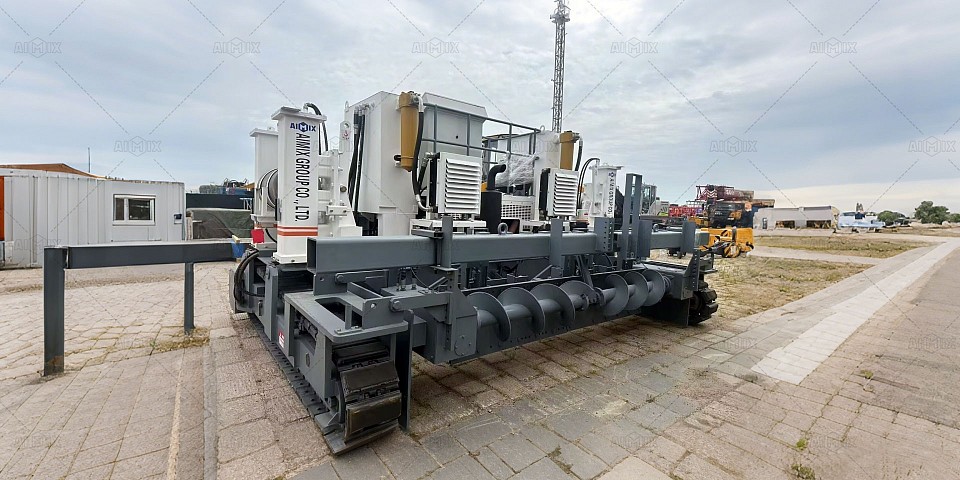
The concrete paving machine has long occupied a peculiar status in the construction equipment hierarchy. It is simultaneously the most critical asset on a highway project and the most vulnerable to the kind of catastrophic failure that halts production for days. Historically, the relationship between the machine and its maintainers has been reactive—a vibration noticed, a temperature gauge creeping into the red, a hydraulic line that finally surrenders under pressure. The operator’s role was to detect symptoms; the mechanic’s role was to diagnose causes after failure had already occurred. This paradigm is being inverted by the proliferation of Internet of Things technology embedded directly into paving equipment. Sensors that once merely displayed operational data now communicate continuously with cloud-based platforms, feeding algorithms trained to recognize the subtle precursors of component degradation. The concrete road paver machine is evolving from a machine that is maintained to a machine that actively participates in its own preservation, analyzing its internal state, predicting failure trajectories, and prescribing interventions before productivity is compromised. This transition from reactive to predictive maintenance represents not merely an incremental improvement in equipment management but a fundamental reconfiguration of how paving operations balance uptime, cost, and risk.
The Sensor Architecture: Building a Machine That Knows Itself
The foundation of predictive maintenance lies in the sensory infrastructure that transforms a conventional paver into a data-generating entity. Modern paving machines are increasingly equipped with what might be termed a diagnostic nervous system—a network of sensors that monitor parameters far beyond the basic metrics of engine temperature and hydraulic pressure. Vibration sensors attached to critical rotating components—conveyor drives, auger assemblies, the main hydraulic pump—sample at frequencies capable of detecting bearing degradation weeks before audible noise or measurable play emerges. Oil quality sensors continuously assess particulate contamination and chemical breakdown within hydraulic systems, alerting when fluid properties deviate from specifications. Temperature sensors are no longer confined to coolant loops; they now monitor individual hydraulic valve blocks, gearbox housings, and even the electrical control cabinets that govern the machine’s automation functions. The density of this sensor array matters because predictive algorithms require granular data. A single temperature reading from the hydraulic reservoir reveals little about impending failure; a network of sensors measuring temperature differentials across individual valve sections can identify a failing solenoid or a blocked passage with remarkable specificity. The machine, in this configuration, does not merely report its state; it generates a multidimensional portrait of its own health.
From Data to Intelligence: The Role of Cloud Analytics and Machine Learning
Sensors produce data, but data alone does not constitute intelligence. The transformation occurs when that data stream is transmitted—typically via cellular or satellite telematics—to cloud-based platforms where algorithms trained on aggregated fleet performance analyze it against historical patterns. The analytical engine distinguishes between normal operational variance and the signatures of degradation. A hydraulic pump operating at eighty-five degrees Celsius under load may be unremarkable; the same pump operating at ninety-three degrees under identical conditions, with a gradual upward trend over successive days, signals internal wear that, if unaddressed, will culminate in failure within a predictable window. Machine learning models refine this predictive capability over time. When a component fails across multiple machines in the fleet, the algorithm incorporates the precursor patterns from those failures into its detection logic, becoming progressively more accurate at identifying similar trajectories in other units. The result is a system that does not simply apply static thresholds—alarms triggered at a predetermined temperature—but dynamically assesses risk based on the machine’s own history, its operational context, and the accumulated experience of the entire equipment population. For the paving contractor, this translates into maintenance recommendations that arrive with specificity: “The left auger drive motor shows wear patterns consistent with seal degradation; replace within fifty operating hours to avoid unscheduled downtime.”
Operational Integration: Translating Predictive Alerts into Actionable Workflows
Predictive maintenance generates value only when its insights are integrated into the operational rhythms of the contracting firm. The telematics platform that issues an alert must connect seamlessly to the workflows that translate that alert into action. This integration operates at multiple levels. At the project level, the alert reaches the site superintendent and the fleet manager simultaneously, enabling coordinated planning. The machine can be scheduled for maintenance during a planned weather delay or between paving shifts rather than in the midst of a critical pour. At the supply chain level, the alert can trigger automated parts ordering, ensuring that the necessary components—a bearing, a seal kit, a hydraulic hose—are on-site before the machine is taken out of service. At the financial level, predictive maintenance shifts the cost profile of equipment ownership. Maintenance moves from an unbudgeted emergency expense to a predictable operational cost, one that can be allocated against project contingencies or built into bid structures. The contractor who masters this integration operates with a distinct competitive advantage: the ability to guarantee uptime, to commit to production schedules with confidence, and to avoid the reputational damage that follows when a paving train stalls for days awaiting a repair that, in hindsight, was entirely foreseeable.
The Economic Calculus: Quantifying the Return on Predictive Investment
The adoption of IoT-enabled predictive maintenance entails upfront costs—the premium for sensor-equipped machinery, the subscription fees for telematics platforms, the internal capacity to respond to alerts. The economic justification rests on a calculus of avoided costs. Unplanned downtime on a paving project is among the most expensive events in construction. A single day of slipform paver inactivity can consume the profit margin of an entire project, as labor crews stand idle, asphalt plants run below capacity, and liquidated damages accrue against completion deadlines. Predictive maintenance reduces the incidence of such events, shifting failures from unplanned to planned and from catastrophic to routine. Beyond downtime avoidance, there are secondary economic benefits.
Components replaced proactively, before they fail, rarely cause collateral damage to adjacent systems; a bearing replaced at the first sign of wear costs a fraction of a bearing that seizes, shears a shaft, and damages the housing that contains it. Fuel efficiency improves when hydraulic systems operate within optimal parameters. Resale value increases for machines with documented predictive maintenance histories. The contractor who calculates return on investment solely in terms of subscription fees versus repair costs misses the broader picture. The true return lies in the ability to bid projects with tighter margins, to accept work in geographies where skilled mechanics are scarce, and to deliver the schedule certainty that differentiates a reliable subcontractor from a risky one. Predictive maintenance does not eliminate the realities of wear and entropy. It does, however, transform those realities from sources of uncertainty into variables that can be managed, planned for, and ultimately controlled.

Quality Control: Achieving Uniform Joints and Smoothness with Concrete Slipform Paver
The slipform paving process represents the apex of mechanized concrete placement, where a continuous, monolithic slab is extruded at high speed with minimal manual intervention. The promise of this technology is unparalleled productivity and superior long-term performance, but this is contingent upon achieving two critical quality parameters: uniform, durable transverse joints and a consistently smooth, true surface profile. These outcomes are not inherent to the machine; they are engineered through a meticulously controlled triad of material science, mechanical precision, and operational discipline. A failure in any one element—an inconsistent concrete mix, a misaligned paver, or an inattentive operator—will manifest as joint spalling, surface irregularities, or internal voids that compromise the pavement's structural integrity and ride quality. Therefore, quality control in slipform paving is a holistic, proactive regime that begins with mix design specification and concludes with controlled curing, with the concrete pavement machine itself serving as the highly calibrated instrument of execution.
The Material Matrix: Engineering Concrete for Slipform Compatibility
The concrete mix is the fundamental input variable, and its design must be subordinated to the demands of the slipform process. This requires a precise balance of seemingly contradictory properties. The mix must possess high cohesiveness to stand unsupported immediately behind the paving mold without slumping or segregating, yet it must exhibit sufficient workability to be fully consolidated by the paver's internal vibration system. This is typically achieved through a low water-cement ratio (often 0.40-0.45) and the use of high-range water reducers (superplasticizers) to provide flow without excess water. The aggregate gradation is paramount; a well-graded, cubical aggregate with a controlled percentage of fines (passing the 75µm sieve) provides the skeleton for stability. The inclusion of micro-synthetic fibers is increasingly common to enhance cohesion and mitigate plastic shrinkage cracking.
Beyond the design, batch-to-batch consistency is non-negotiable. Variations in slump, air content, or aggregate moisture will cause the paver to react differently, leading to changes in surface texture and finishability. The delivery and placement system must be synchronized to provide a continuous, homogeneous supply of concrete to the paver's hopper. Delays or stoppages that allow the concrete in the mold to begin initial set will create a cold joint—a plane of weakness—within the slab. The logistics of transit mixer scheduling, coupled with the use of a continuous material transfer vehicle (MTV) to remix and meter concrete into the paver, are essential components of this material control. The mix must also have a predictable and controlled set time, allowing for finishing operations and joint formation before it becomes unworkable, yet providing early strength to support the weight of the paver and subsequent traffic.
Machine Calibration and Operational Synchrony
The slipform paver is a complex integration of subsystems that must operate in perfect synchrony. Quality control begins with the precision setup and calibration of the machine for the specific pavement profile. The guiding system, whether using a stringline, ski, or 3D GPS, must be established with exacting tolerance. The side forms and the extrusion mold itself must be aligned, leveled, and secured to define the precise cross-section. The vibration system, consisting of multiple internal vibrators spaced across the mold, must be calibrated for frequency and amplitude to achieve full consolidation without over-vibration, which causes segregation and brings excess paste to the surface.
During operation, the synchronized control of forward speed, vibration, and the finishing elements is critical. The forward speed must be matched to the rate of concrete delivery to maintain a consistent head of material in front of the mold. The oscillating or vibrating screed immediately behind the mold is the primary determinant of surface smoothness; its frequency, amplitude, and attack angle must be adjusted based on the concrete's consistency. Following the screed, a series of finishing tools—typically a burlap drag, a final float pan, and sometimes a steel tine for texture—refine the surface. The operator’s role is to monitor the extrusion process constantly, observing the concrete's behavior as it exits the mold and making micro-adjustments to these parameters. This is a dynamic feedback loop, not a set-and-forget operation. The machine’s calibration is the prerequisite, but the operator’s continuous fine-tuning in response to the material is what achieves the specification.
The Process Continuum: Monitoring, Adjustment, and Post-Placement Protocol
Quality control extends as a continuous thread from the start of the pour to days after its completion. During paving, trained personnel must conduct ongoing verification. This includes monitoring the concrete’s temperature and slump at the point of placement, checking the surface for irregularities like tearing or blistering, and verifying the slab’s dimensional conformity. Defects must be identified and addressed immediately. Small surface imperfections can be corrected by hand finishing behind the paver, but significant defects may require a stoppage, removal of the faulty section, and a fresh start—a costly but necessary intervention to preserve long-term integrity.
Immediately following extrusion, the most critical manual intervention occurs: the creation of uniform transverse contraction joints. These are typically sawn into the fresh concrete at precise intervals calculated to control cracking. The timing of this sawing is critical; it must be done after the concrete has gained sufficient strength to prevent raveling at the edges but before internal tensile stresses induce uncontrolled cracking. This "sawing window" is often defined by a combination of time, temperature, and concrete maturity. Following jointing, a rigorous curing protocol must commence without delay. The application of a liquid membrane-forming compound or the placement of wet burlap and plastic sheeting is essential to prevent rapid moisture loss, which causes plastic shrinkage cracking and reduces long-term strength. The slab must be protected from traffic and thermal shock until it reaches sufficient strength. This holistic process—from consistent material, through calibrated mechanical placement, to disciplined post-placement care—ensures the slipform paver delivers not just a line of concrete, but a high-performance pavement asset.