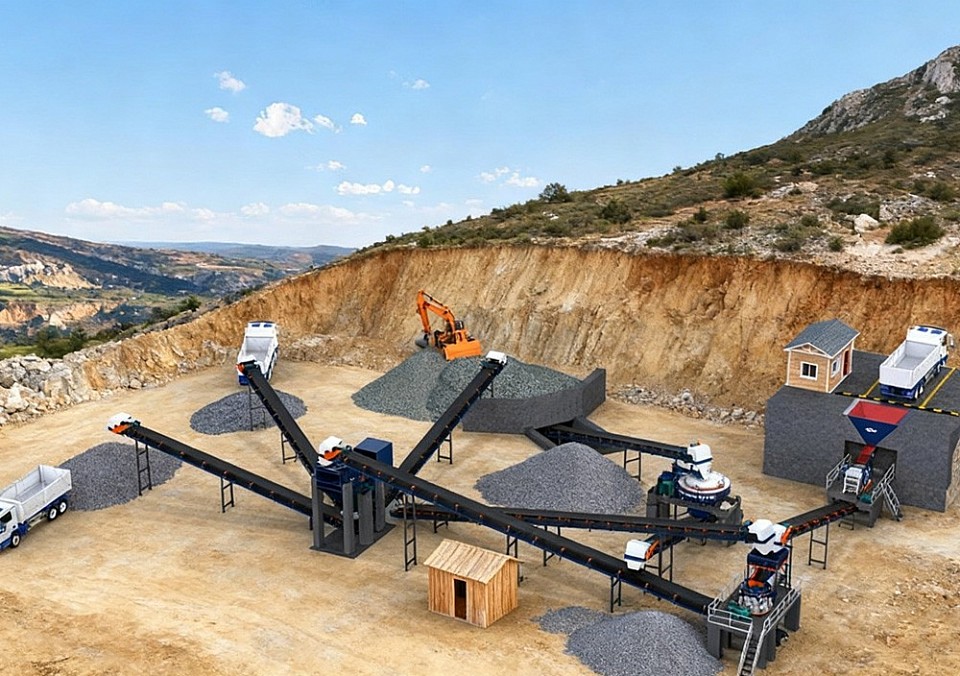
Rock Crushing Solutions
Why Concrete Producers Care About Gravel Shape More Than Crusher Capacity
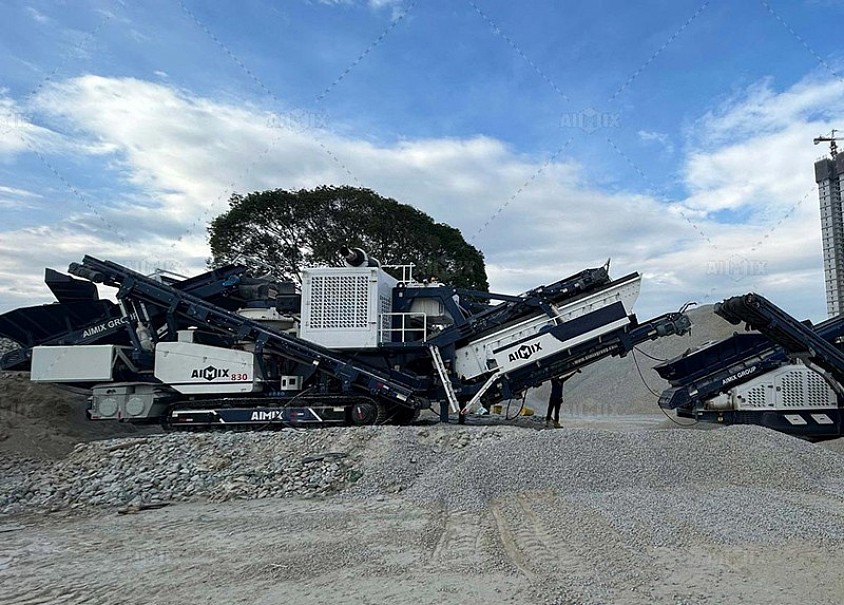
When concrete producers evaluate aggregate supply, the conversation inevitably turns to capacity — tonnes per hour, daily output, plant availability. These are legitimate operational metrics, and no producer ignores them. But among the most technically sophisticated concrete manufacturers, a different variable commands disproportionate attention in aggregate quality assessment: particle shape. The geometry of individual aggregate particles — whether they are cubical and equidimensional, elongated and needle-like, or flat and platy — influences concrete performance across more dimensions than any single capacity figure can capture. It affects water demand, compressive strength, workability, pump-ability, and long-term durability in ways that make particle shape arguably the most consequential aggregate quality parameter in modern concrete production.
This prioritization reflects a maturing understanding of concrete mix design science. As performance specifications become more demanding — lower water-cement ratios, higher strength classes, self-compacting concrete, and high-durability mixes for aggressive exposure environments — the sensitivity of mix performance to aggregate shape characteristics increases correspondingly. A mix design that tolerates moderate shape variability at C25 concrete specification may fail to achieve workability, strength, or durability targets at C50 or above if aggregate shape quality is not controlled. For concrete producers operating at the technical frontier of their market, shape quality is not a specification detail. It is a production variable whose management determines competitive capability.
The Physical Mechanisms Through Which Particle Shape Influences Concrete Performance
Understanding why particle shape matters requires examining the physical role that aggregate particles play within the concrete matrix. Aggregate does not simply occupy volume in concrete — it forms a structural skeleton whose geometry determines how efficiently cement paste can bind the system together, how the fresh mix flows under its own weight or applied consolidation energy, and how load is transferred through the hardened matrix under stress. Particle shape influences each of these functions through mechanisms that are physically well understood and practically measurable.
Elongated and flaky aggregate particles present a higher surface area per unit volume than cubical particles of equivalent nominal size. This elevated specific surface area demands more cement paste to coat each particle adequately — and more water to achieve the paste fluidity needed for the mix to reach target workability. The water demand penalty associated with poorly shaped aggregate is real, consistent, and quantifiable through standard mix design testing. It typically ranges from 10 to 25 liters of additional water per cubic meter of concrete, depending on the severity of shape irregularity and the aggregate's proportion in the mix design.
This additional water requirement creates a compounding effect on mix performance. To maintain the water-cement ratio specified for strength and durability targets while accommodating the elevated water demand of poor-shape aggregate, the cement content must increase proportionally — raising the mix's material cost. Alternatively, accepting the higher water-cement ratio that poor shape forces sacrifices compressive strength development and long-term durability. Neither outcome is acceptable in performance-specified concrete production, which is precisely why producers who understand this mechanism treat shape quality as a cost control variable as much as a quality control one.
Cubical, equidimensional aggregate particles pack more efficiently than elongated or flaty alternatives. Higher packing density in the aggregate skeleton reduces the void volume that cement paste must fill to produce a cohesive, workable concrete mix — directly reducing the paste volume required per cubic meter of concrete and consequently the cement and water content needed to achieve target fresh and hardened concrete properties. Aggregate producers who measure and report the packing density of their products — and concrete producers who specify minimum packing density requirements — are engaging with particle shape through its most practically important structural consequence.
In hardened concrete under compressive load, stress is transferred through the aggregate skeleton via particle-to-particle contact at aggregate surfaces and through the cement paste matrix bonding aggregate surfaces together. The geometry of these contact zones — determined substantially by particle shape — influences how efficiently load transfers through the system without initiating the microcracking that precedes macroscopic failure.
Cubical aggregate particles with relatively flat contact faces distribute compressive stress across larger contact areas than angular, elongated particles whose contacts are concentrated at tips and edges. This more efficient stress distribution delays the onset of interfacial transition zone microcracking — the crack initiation mechanism that ultimately governs concrete compressive strength under sustained loading. Laboratory studies consistently demonstrate that concrete mixes produced with well-shaped cubical aggregate achieve higher compressive strength at equivalent water-cement ratio than mixes with elongated or flaky aggregate — a shape quality premium that becomes increasingly significant as target strength class rises.
How Crusher Selection and Configuration Determines Aggregate Shape Output
The shape characteristics of crushed aggregate are not random outcomes of the crushing process — they are substantially determined by the type of gravel crusher used, its operating parameters, and the number of crushing stages through which the material passes. This connection between crushing methodology and shape quality is what makes crusher selection, from a concrete producer's perspective, a shape quality decision as much as a capacity decision.
Jaw crushers and cone crushers — the dominant compression crushing technologies in aggregate production — fracture rock by applying compressive force between converging crushing surfaces. The fracture planes generated by compression crushing tend to follow the rock's natural cleavage and structural weakness orientations, which in many rock types produce elongated and platy particles rather than the equidimensional cubical shapes that concrete producers prefer. Primary jaw crushing, in particular, produces a particle shape distribution that typically contains elevated proportions of elongated and flaky particles that require further shape improvement in secondary and tertiary crushing stages.
Vertical shaft impact crushers — VSI crushers — approach size reduction through a fundamentally different mechanism: high-velocity impact that shatters rock by inducing tensile stress throughout the particle rather than applying localized compressive force. The result is preferential fracture through the particle's interior rather than along surface weakness planes, generating particles whose shape is consistently more cubical and equidimensional than compression crushing of the same rock type produces. VSI crushing as a tertiary or quaternary stage specifically for shape improvement — applied after compression crushing stages have achieved the required size reduction — is standard practice in aggregate plants supplying demanding concrete producers, and the shape quality premium this additional processing stage delivers is the reason concrete producers are willing to pay for it.
Closed-circuit crushing configurations — where oversize material is screened out of the rock crusher discharge and recirculated through the crushing chamber for additional reduction — expose elongated and flaky particles to multiple crushing events that progressively improve their shape toward the cubical ideal. Each pass through the crushing chamber applies additional fracture events preferentially to the elongated particle dimensions, reducing aspect ratio and improving the shape index of the recirculated fraction. Concrete producers specifying shape quality requirements effectively require their aggregate suppliers to operate closed-circuit configurations — because open-circuit crushing cannot achieve the shape consistency that performance concrete specifications demand.
Measuring and Specifying Aggregate Shape in Concrete Production Contracts
The practical application of shape quality knowledge in concrete production requires measurement methods and specification frameworks that translate physical understanding into contractual requirements and quality control procedures. Several standardized test methods and indices exist for this purpose, each capturing different aspects of shape quality and each with specific relevance to concrete performance prediction.
Flakiness index — the mass percentage of aggregate particles whose minimum dimension is less than 0.6 times their mean sieve size — is the most widely used shape quality specification parameter in aggregate supply contracts for concrete production. Elongation index measures the proportion of particles whose maximum dimension exceeds 1.8 times their mean sieve size. Together, these indices characterize the two principal shape deficiency modes — excessive flatness and excessive elongation — that most significantly degrade concrete mix performance. Concrete producer specifications typically set maximum flakiness index limits of 25 to 35 percent for structural concrete aggregate, with lower limits applied for high-performance and self-compacting concrete mixes where shape sensitivity is highest.
Aggregate shape quality is not a static characteristic that can be verified once at source approval and assumed constant thereafter. Crusher wear progression — the gradual degradation of jaw plates, cone liners, and VSI rotor components — progressively affects shape output as wear reduces the geometric precision of the crushing surfaces. Concrete producers who specify shape quality requirements without implementing ongoing monitoring of delivered aggregate shape allow wear-driven shape quality deterioration to progress undetected until mix performance consequences become visible — at which point the concrete already placed with degraded aggregate cannot be recalled. Regular flakiness and elongation index testing of delivered aggregate, with documented results against specification limits and supplier notification when trends indicate approaching non-compliance, is the quality management practice that makes shape specification meaningful rather than merely contractual.
Choosing a Mobile Stone Crusher Plant: Investment Mistakes to Avoid
The decision to purchase a mobile stone crusher plant represents a significant capital commitment—typically $300,000 to $1.5 million depending on throughput capacity and features. Yet industry data suggests that nearly one in three buyers regret their selection within the first year of operation. The remorse does not stem from equipment failure. It stems from mismatched specifications: a plant too large for the application, too fragile for the material, or too complex for the available maintenance expertise. This investigation identifies the most costly mistakes contractors make when selecting mobile crushing equipment. Each error is preventable. Each carries a measurable financial consequence.
Mistake One: Prioritizing Maximum Throughput Over Average Throughput
Manufacturers advertise peak throughput numbers achieved under ideal conditions: dry material, optimal gradation, continuous feed, and 70°F ambient temperatures. Those conditions rarely exist on actual job sites. Wet clay blinds the screening decks. Oversize boulders bridge across the jaw opening. Intermittent feed from a single excavator starves the chamber. The result is that a plant rated for 300 tons per hour might average only 180. The mistake lies in selecting a plant based on the 300 figure rather than the expected 180. A smaller plant rated for 250 but averaging 200 actually outperforms the larger unit in real-world conditions.
The financial consequence of this error is twofold. First, the buyer pays a premium for capacity they cannot utilize—often 20-30% higher purchase stone crusher plant price. Second, the larger plant consumes more fuel per ton produced. A 300-ton-per-hour jaw crusher typically burns 25-30 gallons per hour. A 200-ton-per-hour model burns 15-18 gallons. At $4 per gallon and 1,500 operating hours annually, the larger plant costs an additional $18,000 to $24,000 in diesel per year. Buyers should request fuel consumption curves from manufacturers and calculate cost per ton, not cost per hour.
Mistake Two: Ignoring Material Characteristics During Selection
A crusher that excels on limestone may fail on granite. The difference is compressive strength. Limestone typically fractures at 15,000 to 25,000 psi. Granite ranges from 30,000 to 50,000 psi. A jaw crusher configured for limestone uses a wider nip angle and shallower crushing chamber. On granite, that same configuration experiences accelerated wear and frequent stall events. Buyers who fail to provide representative material samples to manufacturers receive generic recommendations that ignore these geological realities. The result is a plant that underperforms from the first day.
The corrective action requires laboratory testing. Reputable manufacturers offer free material analysis: crush a 500-kilogram sample through their proposed configuration and measure wear rates, throughput, and product gradation. Buyers should request a written report detailing the specific wear part alloys recommended for their material. For abrasive stone (silica content above 40%), manganese steel jaws with a hardness of 450-500 BHN are essential. For less abrasive material, standard Hadfield manganese (220-250 BHN) suffices. The difference in jaw plate life is a factor of three to one. A buyer who skips this testing may face jaw replacement every 400 hours instead of every 1,200 hours—at $8,000 per change, the cost adds up quickly.
Mistake Three: Underestimating Support Infrastructure Requirements
The mobile crusher plant arrives on a lowboy trailer. What arrives next is often overlooked: the support equipment required to keep it running. A 300-horsepower diesel engine requires 30 gallons of oil per change. The hydraulic tank holds 150 gallons of specialized fluid. The wear parts weigh 500 pounds each and require overhead lifting capacity. Many buyers forget to budget for the service truck, the oil containment system, the 5-ton gantry crane, and the trained mechanic. Operating a modern crusher without these ancillaries is like buying a race car without a pit crew. The machine will run. It will not run for long.
The Hidden Cost of Downtime
A crusher that sits idle due to a failed hydraulic hose costs more than the repair. It costs the daily overhead of the crew, the rental of alternative equipment, and the schedule delay penalties that cascade through the project. Reliable operators maintain a spare parts inventory equal to 10-15% of the crusher's purchase price—$30,000 to $150,000 in belts, bearings, hydraulic cartridges, and wear parts. Buyers who ignore this requirement face expedited freight charges (often $2,000 to $5,000 per overnight shipment) and extended downtime while waiting for ground shipments from distant warehouses. A well-stocked parts trailer parked next to the crusher is the difference between a two-hour repair and a two-day shutdown.
Mistake Four: Selecting Unfamiliar Control Architectures
Modern mobile crushers feature programmable logic controllers (PLCs) that manage feed rate, engine load, and product quality. Different manufacturers use different control platforms. One uses Allen-Bradley. Another uses Siemens. A third uses a proprietary system with no diagnostic software available to end users. Buyers who select a proprietary platform become dependent on the manufacturer for every troubleshooting event. When the manufacturer's technician requires 48 hours to travel to the site, the crusher sits idle. When the proprietary display screen fails and the replacement is back-ordered for three weeks, the crusher becomes a monument to poor planning.
The correct approach demands open architecture controls that support remote diagnostic access. A crusher with a cellular modem can transmit fault codes to three different service providers simultaneously. The buyer can then choose the fastest response, not the only response. Furthermore, the control system should support Modbus or CANbus connectivity to the buyer's existing telematics platform. Without this integration, the buyer must monitor the crusher separately from the rest of the fleet, reducing visibility and increasing administrative overhead. A $1 million asset deserves a control system that does not lock the owner into a single source of support.
Mistake Five: Neglecting the Resale Value Trajectory
No crusher lasts forever. The average mobile plant operates for five to seven years before being traded or sold. Resale value varies dramatically by brand, configuration, and maintenance history. A well-known European brand with a local dealer network retains 40-50% of its purchase price after five years. An unfamiliar brand with no local support retains 15-20%. The difference on a $500,000 purchase is $100,000 to $150,000 in lost equity. Buyers who focus exclusively on the initial purchase price often discover that the "cheaper" machine was actually more expensive once the resale calculation is complete.
Verifying Dealer Density Before Purchase
Resale value correlates directly with parts availability. A used crusher with a six-week lead time on major components sells at a steep discount. A used crusher with next-day parts availability from a local distributor commands a premium. Buyers should map the dealer network before committing to a brand. Within 200 miles of the intended operating territory, there must be a stocking distributor for wear parts, hydraulic components, and engine spares. Absent that density, the resale value trajectory points downward. The brand may be reputable globally. On a remote job site, reputation does not matter. Parts availability does.
The final mistake is the most common: purchasing without a trial. Reputable manufacturers offer a one-week field trial with an option to return the machine for a full refund less freight. Buyers who decline this trial assume all performance risk. Those who accept it spend 40 hours operating the crusher on their material, with their operators, under their site conditions. The data from that trial—fuel consumption, throughput, wear rates, and downtime incidents—provides the only reliable basis for an investment decision. Everything else is speculation. And speculation is not a strategy.
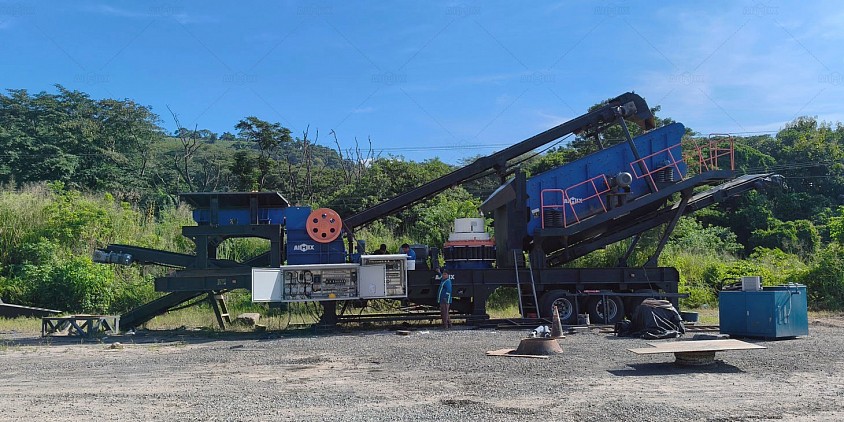
Why Your Granite Output Quality Depends More on Setup Than You Think
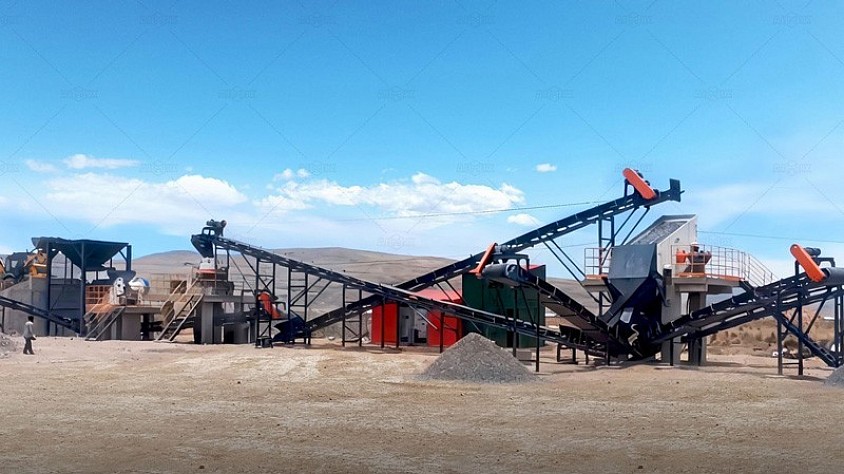
Let's debunk a myth right now. The assumption that premium granite crushing hinges solely on machine brand or jaw plate metallurgy is a costly oversimplification. Walk onto any quarry floor, and you will witness identical granite crushers producing radically different results. One yields cubical, flawlessly graded aggregates fetching top dollar. The other generates flaky, elongated slivers destined for the low-margin fill pile. The differential? Setup. Not horsepower, not steel composition, but the precise choreography of feed control, chamber configuration, and discharge calibration. In the current aggregate economy, where spec compliance dictates profitability, ignoring setup nuance is tantamount to leaving money in the rubble. This analysis dissects the three setup levers that dictate whether your granite output commands premium pricing or becomes a waste stream headache.
Feed Uniformity: The Unsung Hero of Particle Shape
Granite is unforgiving. Its crystalline structure demands consistent compression for optimal fracture. When your feeding mechanism chokes or starves, the crushing chamber responds with violence or inefficiency. A surge of boulders forces the mantle to gape open, producing oversized, misshapen rocks. A trickle of fines allows the liners to bang together without material cushioning, accelerating wear and generating microfractures that weaken the final product. The sweet spot is a steady, fully loaded choke feed—a term describing a chamber perpetually filled to approximately 80% capacity. Achieving this requires a vibrating feeder with variable frequency drive (VFD) and a trickle valve, not a simple on-off belt.
Choke Feeding Dynamics: What the Manuals Miss
Here is where analytical rigor separates pros from amateurs. A choke-fed crusher operates with material-on-material compression, not liner-on-rock impact. The granite particles crush each other, producing cubical shapes with minimal internal damage. Conversely, a starved crusher forces the liners to perform the fracturing work directly, yielding elongated, flaky particles that fail sieve analysis. Monitor your stone crusher's current draw. A steady amperage draw with minor fluctuations indicates ideal choke feeding. Wild swings from low to high signify feed variability. Install a sonic or laser level sensor in the chamber, linked to the feeder's VFD. Automate response. Manual adjustments are too slow for granite's rapid wear dynamics.
Closed Side Setting Calibration: Millimeters Determine Marketability
The closed side setting (CSS)—the narrowest gap between mantle and concave—dictates your top-size output. Yet most operators set it once and forget it. Granite's abrasive nature wears liners unevenly. The CSS opens progressively, coarsening your product without warning. By the time visual inspection detects oversized material, you have already shipped non-compliant loads. The solution is relentless measurement and adjustment. Use lead pellets, crushed aluminum foil, or laser measurement tools every 40 operating hours. Record each reading. Chart the wear curve. Anticipate CSS drift before it affects quality.
Hydraulic Adjustment Systems: Automation Versus Feel
Modern cone crushers feature hydraulic CSS adjustment. Push a button, and the mantle moves. Convenient, yes. Foolproof, no. Hydraulic systems experience drift from oil temperature changes, seal leakage, and pressure relief valve inconsistencies. Relying solely on the digital readout invites error. Cross-validate with physical measurements weekly. Furthermore, understand your liner wear pattern. The lower chamber wears faster than the upper. Compensate by adjusting CSS incrementally as liners age, not waiting for complete replacement. This dynamic calibration maintains consistent product grading across the liner's lifecycle, maximizing both quality and wear part longevity.
Closed Circuit Configuration: Recirculation as a Quality Tool
The most underutilized setup lever is recirculation. A typical open circuit sends material through the crusher once, discharging a mix of spec and oversize material onto a screen. Oversize particles are wasted or sold at discount. A closed circuit routes screen oversize back to the cone crusher for another pass. This recirculation dramatically improves particle shape and size consistency. Each subsequent pass exposes elongated particles to additional compression, breaking them into cubical fragments. Yet, operators resist recirculation due to conveyor complexity and perceived throughput loss.
Recirculation Ratio Optimization: Balancing Quality and Throughput
Not all recirculation is equal. A 1:1 recirculation ratio (returning the same tonnage as new feed) doubles the load on your crusher but yields premium cubical aggregate. A 3:1 ratio indicates severe feed issues upstream. Calculate your recirculation load by weighing screen oversize over a defined period. Target a ratio between 0.5 and 1.5 for most granite applications. Higher than 1.5 suggests the CSS is too tight or the feed is too coarse. Lower than 0.5 indicates the CSS is too open, allowing oversize to pass. Adjust accordingly. Additionally, install metal detectors and tramp iron magnets on the recirculation conveyor. Granite quarries often accumulate blasting debris and tool fragments, which, when recirculated, cause catastrophic damage. Protecting the closed loop is non-negotiable.
Screening Efficiency: The Hidden Variable
A crusher setup is only as effective as its screening partner. If your screen blinds, wears, or mis-sizes, recirculation becomes a fool's errand. Granite's sharp edges accelerate polyurethane and wire cloth wear. Inspect screen panels daily for blinding (fines stuck in apertures) and pegging (near-size particles wedged). Use flinger chains or bouncing balls on the lower deck to keep apertures clear. Furthermore, verify screen stroke and throw angle. A circular motion screen with inadequate stroke will stratify poorly, allowing oversize to pass with fines. This "carryover" contaminates your product, requiring re-screening or rejecting the load. Before blaming the crusher, audit the screen. Most granite quality issues trace to screening, not crushing.
Beyond Hardware: The Operator's Role in Setup Success
The most sophisticated automation cannot overcome indifferent operators. Setup is a discipline, not an event. Establish a pre-shift checklist: verify choke feed status, measure CSS with a physical tool, inspect screen panels for wear, calculate recirculation ratio from shift data, and log liner wear measurements. Use digital checklists with photo capture to enforce compliance. Hold weekly quality meetings to review aggregate sieve analyses and adjust setup parameters accordingly. Granite demand premium pricing for consistent, cubical, well-graded material. Achieving that consistency requires analytical rigor applied to setup, not wishful thinking about machine specifications. Your crusher is capable. Your setup determines whether it delivers.
Stone Crusher Machine Price List Explained: Warranty, Delivery, Installation Requirements
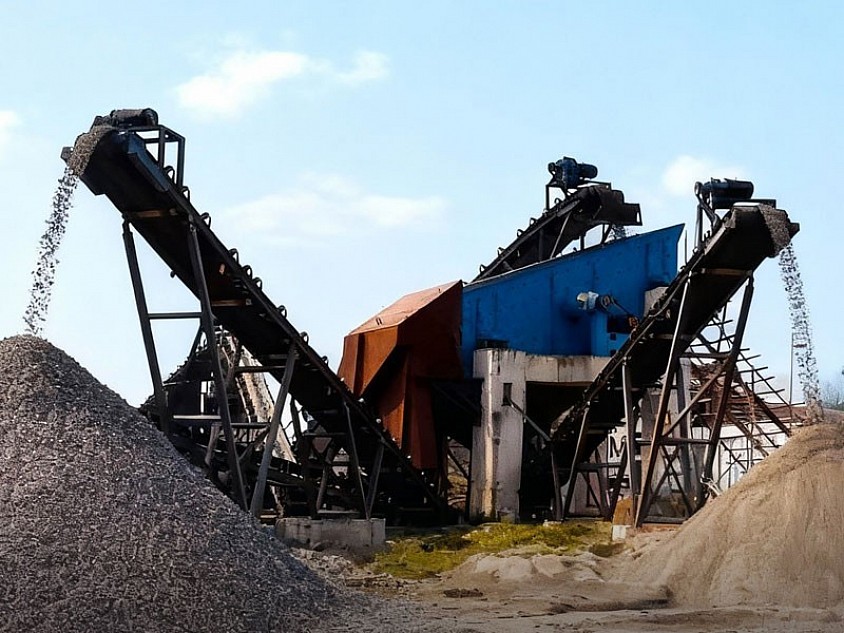
The price list is a temptation. It arrives in your inbox with neat columns and attractive numbers. The stone crusher plant price is clear. The total seems manageable. The temptation is to sign. The professional buyer resists. The price list is not the whole story. Warranty, delivery, and installation are separate chapters. Each chapter contains clauses that can add cost or reduce risk. This article creates a creative framework for confirming these three elements. The framework is a checklist. Tick each box. Ask each question. The seller who answers clearly is a partner. The seller who hesitates is a risk. The professional buyer avoids risk.
Warranty: The Fine Print That Saves Thousands
The first warranty question is duration. Twelve months is standard. Twenty-four months is excellent. The second question is scope. Does the warranty cover parts only, or parts and labour? Labour is expensive. A technician spending three days on your site costs thousands. A parts-only warranty leaves you paying that bill. The creative observation is that many buyers assume labour is included. It is not. Ask. "Does your warranty include the cost of the technician's time?" The answer will surprise you. Some sellers offer a "full warranty" that is actually parts-only. Read the document. Do not assume.
The third warranty question is exclusions. Wear parts are usually excluded. Jaw dies, blow bars, and conveyor belts are consumables. That is fair. The unfair exclusions are hidden. Some warranties exclude bearings. Some exclude hydraulic pumps. Some exclude the control system. The professional buyer asks for a written list of excluded components. The fourth question is shipping. Who pays to ship a replacement part? A warranty that requires you to pay for shipping is a discount on parts, not a warranty. Shipping a 50-kilogram bearing from China costs hundreds of dollars. The creative argument is that a warranty without shipping coverage is incomplete. Ask. "Do you cover shipping costs for warranty replacements?" If the answer is no, negotiate. If the seller refuses, consider other suppliers.
Delivery: From Factory to Foundation
The delivery terms determine who bears the risk. EXW (Ex Works) means you collect from the factory. You pay for loading, transport, insurance, and customs. FOB (Free on Board) means the seller delivers to the port. You pay from there. CIF (Cost, Insurance, Freight) means the seller pays for shipping to your port. You pay port charges and inland transport. DDP (Delivered Duty Paid) means the seller delivers to your site. You pay nothing extra. The creative observation is that a low stone crusher machine price often comes with EXW terms. The machine seems cheap. The total landed cost is not. The professional buyer asks for a DDP quote. It may be higher. It is also the only price that reflects the true cost.
The delivery lead time is the next confirmation. A crusher that arrives in 30 days is different from one that arrives in 90 days. The professional buyer asks for the lead time in writing. The creative addition is a penalty clause. "If the machine is delayed beyond the agreed lead time, the seller will pay a penalty of 1 percent of the purchase price per week." Some sellers will agree. Others will refuse. The refusal tells you something about their confidence in their own schedule. A seller who cannot commit to a date is a seller who will be late. Plan accordingly.
Installation: From Crate to Crushing
The installation question is simple. Is it included? Many sellers exclude installation from the stone crusher machine price. The machine arrives in pieces. You assemble it. You hope it works. The professional buyer asks for installation to be included. A technician should visit your site. They should supervise the assembly. They should calibrate the aggregate crusher. They should run the first batch. This service costs the seller $2,000 to $10,000. It costs you more if you do it yourself incorrectly. The creative argument is that installation is not a luxury. It is insurance. Pay for it.
The final confirmation is foundation. Who prepares the site? The seller usually does not. You must pour a concrete foundation. You must provide power. You must supply water. The professional buyer asks for a foundation drawing. The drawing shows the dimensions, the reinforcement, and the anchor bolt locations. A seller who cannot provide a foundation drawing is not professional. A seller who provides a clear drawing is a partner. The creative observation is that a good foundation drawing saves weeks of confusion. It is the difference between a crusher that sits level and a crusher that wobbles. Wobbling destroys bearings. Bearings are expensive. Ask for the drawing. Build the foundation correctly. Then install the crusher. Then crush rock. Then make money.
From Quarry to Site: Why a Wheeled Mobile Crusher Plant Is a Wise Decision
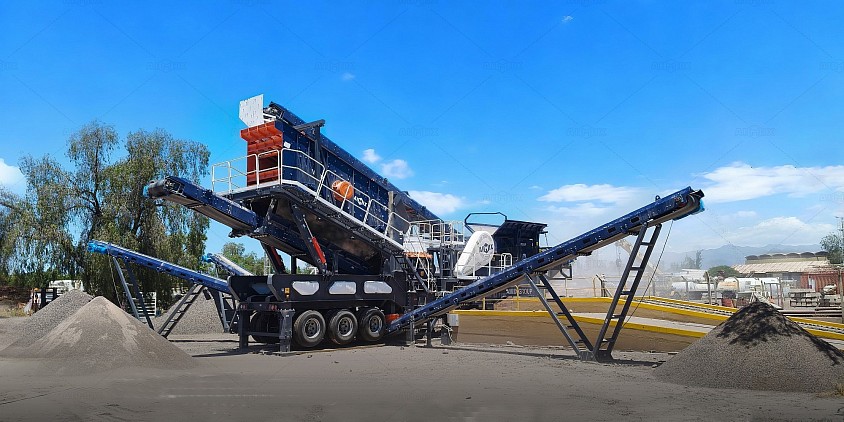
The journey of aggregate from quarry face to construction site is a logistical puzzle. Fixed crushing plants solve one piece of the puzzle. They reduce rock to specification. They do not move. The material must be transported to the plant. Then the product must be transported from the plant to the site. Each transport step adds cost. Each step adds time. The wheeled mobile crusher plant offers an alternative. It moves. It processes rock at the quarry face. It can also move to the construction site, processing demolition debris or oversize material on location. This article argues that the wheeled mobile crusher is a wise decision for contractors who value flexibility, reduced haulage costs, and rapid deployment. The argument is professional. The style is creative. The conclusion is clear.
Mobility Reduces Haulage Costs
The traditional quarry moves rock. Blast rock is loaded onto dump trucks. The trucks travel to the fixed crusher. The distance may be 500 metres. It may be 2 kilometres. Each trip consumes fuel. Each trip adds wear to tyres and suspension. Each trip requires a driver. The wheeled mobile crusher eliminates the trip. The crusher moves to the face. The excavator loads directly into the crusher hopper. The crushed material discharges onto a conveyor. The conveyor loads a truck or creates a stockpile. The cost saving is significant. A quarry producing 500,000 tonnes per year can save hundreds of thousands of dollars in haulage costs. The creative observation is that the mobile crusher turns the quarry inside out. The rock stays still. The crusher moves. That inversion is the source of efficiency.
The wheeled mobile crusher is not limited to quarries. It can be towed to a construction site. Demolition debris—concrete, brick, asphalt—is loaded into the crusher. The mobile impact crusher produces recycled aggregate. The aggregate is used on site as fill or base material. No material is hauled away. No new material is hauled in. The saving on transport costs is substantial. The creative argument is that the mobile crusher transforms waste into resource. The demolition debris that was a cost becomes a benefit. The contractor who owns a mobile crusher can bid on projects that require onsite recycling. The competitor without a crusher cannot.
Flexibility to Match Project Scale
A fixed crusher is sized for the quarry's peak production. It is often oversized for the average demand. The wheeled mobile crusher can be sized to the specific project. A small quarry may use a 200 tph crusher. A large demolition project may use a 400-tonne-per-hour crusher. The crusher can be moved to the next project when the current one ends. The creative observation is that a fleet of mobile crushers offers flexibility that a single fixed crusher cannot match. The contractor can deploy crushers to multiple sites. The crushers can be redeployed as demand shifts. The capital is not tied to a single location.
The wheeled mobile crusher is transported on a low-bed trailer. It arrives at the site. It is unhooked. The operator extends the outriggers. The crusher is level. The machine is ready to crush in a few hours. A fixed crusher requires weeks of civil works. Foundations must be poured. Conveyors must be installed. The creative argument is that time is money. The mobile crusher starts producing revenue days after arrival. The fixed crusher starts producing revenue months after arrival. The difference in cash flow is substantial. The contractor who values rapid deployment chooses mobile.
Quality and Maintenance Considerations
A wheeled mobile crusher can produce aggregate that meets specification. The crusher settings are adjustable. The closed side setting controls the maximum particle size. A screen can be integrated to separate fractions. The creative observation is that mobility does not compromise quality. A well-designed mobile aggregate crusher produces aggregate as consistent as a fixed plant. The buyer should verify that the mobile crusher includes a screen and a recirculating conveyor. These features enable closed-circuit crushing. The closed circuit produces a consistent gradation.
The wheeled mobile crusher must be maintained. The design should provide easy access to wear parts. The jaw dies or blow bars should be replaceable without dismantling the entire machine. The creative argument is that maintenance access is a design feature that is often overlooked. A crusher that requires a crane to change wear parts is a crusher that will experience extended downtime. A crusher that allows the operator to change wear parts with a simple hoist is a crusher that will be maintained on schedule. The buyer should inspect the maintenance access before purchase.
The professional conclusion is that the wheeled mobile crusher plant is a wise decision for many applications. It reduces haulage costs. It provides flexibility. It enables on-site recycling. It can be deployed rapidly. The buyer should verify that the crusher includes features such as closed-circuit crushing, accessible wear parts, and a robust towing arrangement. With these features in place, the wheeled mobile crusher will deliver value from quarry to site. The decision is wise. The investment is sound.
Stone Crusher Plant Investment Cost: Equipment, Civil Work, and Setup Costs
The decision to invest in a stone crusher plant is substantial. The capital required extends far beyond the crusher itself. Equipment costs are the most visible component. Civil works and setup costs are often underestimated. The result is a budget that is incomplete. The contractor who begins construction with an incomplete budget will face delays and cost overruns. This article provides an objective breakdown of stone crusher plant investment costs. It is organised into three categories: crushing and screening equipment, material handling and storage, and civil works and site development. The argument is that a realistic budget must account for all three. The contractor who omits any category is not saving money. They are deferring expense. The deferred expense will be larger than the initial saving.
Crushing and Screening Equipment
The primary crusher is the first machine in the processing line. It reduces blasted rock from 500-800mm to 150-200mm. The two common choices are jaw crushers and gyratory crushers. A jaw crusher is suitable for smaller plants (up to 300 tonnes per hour). A 100 tonnes per hour jaw crusher costs $80,000 to $150,000. A 200 tonnes per hour jaw crusher costs $150,000 to $300,000. A gyratory crusher is suitable for larger plants. A 300 tonnes per hour gyratory crusher costs $300,000 to $600,000. The primary crusher is typically the most expensive single component. The objective buyer compares capacity and cost. A jaw crusher has lower initial cost. A gyratory crusher has lower operating cost per tonne. The choice depends on expected production volume and operating hours.
Most plants require secondary and tertiary crushing to achieve final product sizes. Cone crushers are the standard choice for secondary and tertiary stages. A 100 tonnes per hour cone crusher costs $100,000 to $200,000. A 200 tonnes per hour cone crusher costs $200,000 to $400,000. Impact crushers are an alternative for softer rock or for producing cubical aggregate. A horizontal shaft impactor (HSI) costs $150,000 to $300,000 for 100-200 tonnes per hour. A vertical shaft impactor (VSI) for sand production costs $200,000 to $500,000. The objective buyer considers the rock type. Cone crushers are more efficient for hard, abrasive rock. Impact crushers produce better particle shape but have higher wear part costs. The selection must balance product quality against operating expense.
Every crusher stage requires a screen to separate material by size. A triple-deck vibrating screen costs $30,000 to $80,000. A plant with three crushing stages will have three or four screens. The total screen cost is $90,000 to $320,000. Conveyors transport material between crushers and screens. A 30-metre conveyor costs $20,000 to $40,000. A crushing plant may require 100 to 300 metres of conveyors. The total conveyor cost is $70,000 to $200,000. The objective buyer does not underestimate these components. Screens and conveyors are not accessories. They are essential subsystems. Their cost is significant.
Material Handling and Storage
The primary crusher requires a feeder to regulate material flow. A vibrating grizzly feeder costs $20,000 to $50,000. The feeder is mounted under a hopper. The hopper receives material from dump trucks or loaders. A 30-tonne hopper costs $15,000 to $30,000. The objective buyer includes these costs. A plant without a feeder will experience uneven crusher loading. Uneven loading reduces throughput and increases wear. The feeder is not optional. It is necessary.
Finished aggregates must be stored before sale or use. A stockpile is simply a heap of material on the ground. The cost is land area and a loader to reclaim material. A loader costs $50,000 to $150,000. The alternative is a product bin with a weighbridge and a truck loading chute. A four-bin system with conveyors and weighbridge costs $200,000 to $500,000. The objective buyer considers the customer base. A plant that serves multiple customers with different product requirements benefits from bins. A plant that supplies a single customer may use stockpiles. The cost difference is substantial. The choice must align with the business model.
Stone crusher plants generate dust. Regulatory authorities require dust control. A water spray system for the primary crusher, secondary crusher, and transfer points costs $20,000 to $50,000. A baghouse dust collector for a dry plant costs $50,000 to $150,000. The objective buyer includes dust suppression in the budget. A plant that fails to control dust will face fines, shutdowns, and community opposition. The cost of suppression is small compared to the cost of non-compliance.
Civil Works and Site Development
The plant requires land. A typical stone crusher plant occupies 2 to 5 hectares. Land cost varies by region. In a remote area, land may cost $10,000 to $50,000 per hectare. In a developed area, land may cost $100,000 to $500,000 per hectare. The objective buyer also budgets for land preparation. Clearing vegetation. Grading. Compacting. A site preparation contractor charges $20,000 to $100,000 depending on the site condition. The land cost and preparation cost are often overlooked. They are not optional. The plant must sit somewhere. The somewhere must be prepared.
Each crusher, screen, and conveyor requires a concrete foundation. The foundation supports the weight and absorbs vibration. A primary crusher foundation may require 50 to 150 cubic meters of concrete. At $200 per cubic meter (materials and labour), the cost is $10,000 to $30,000 per foundation. A plant with 10 major components has foundation costs of $100,000 to $300,000. The objective buyer does not assume that foundations are included in the equipment price. They are not. The buyer must budget separately. A consultant should design the foundations. A contractor should pour them. The cost is significant.
The plant requires electrical power. A 200 tonnes per hour plant may have 500 to 1,000 kilowatts of connected load. A transformer and switchgear cost $50,000 to $150,000. Cabling between components costs $30,000 to $80,000. A control system with a PLC and operator interface costs $50,000 to $150,000. The objective buyer includes these costs. A plant without a control system is not a plant. It is a collection of independent machines. The control system enables coordinated operation. It improves efficiency. It reduces labour. The cost is justified.
The objective conclusion is that a stone crusher plant investment cost has three major components: equipment, material handling, and civil works. A 200 tonnes per hour plant may have stone crusher plant cost of $800,000 to $1.5 million. Material handling and storage may add $300,000 to $800,000. Civil works and site development may add $300,000 to $800,000. The total investment is $1.4 million to $3.1 million. The contractor who budgets only for equipment will be surprised. The contractor who budgets for all three components will not. The difference is planning. Plan completely. Budget realistically. Invest wisely.
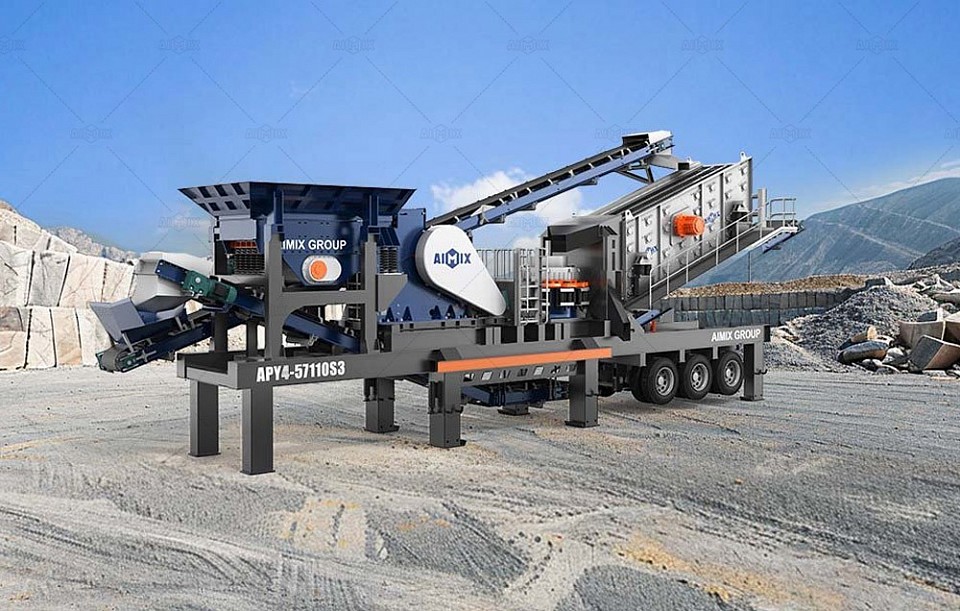
Mobile Jaw Crusher Price for Quarry vs. Recycling: Same Machine, Different Reality
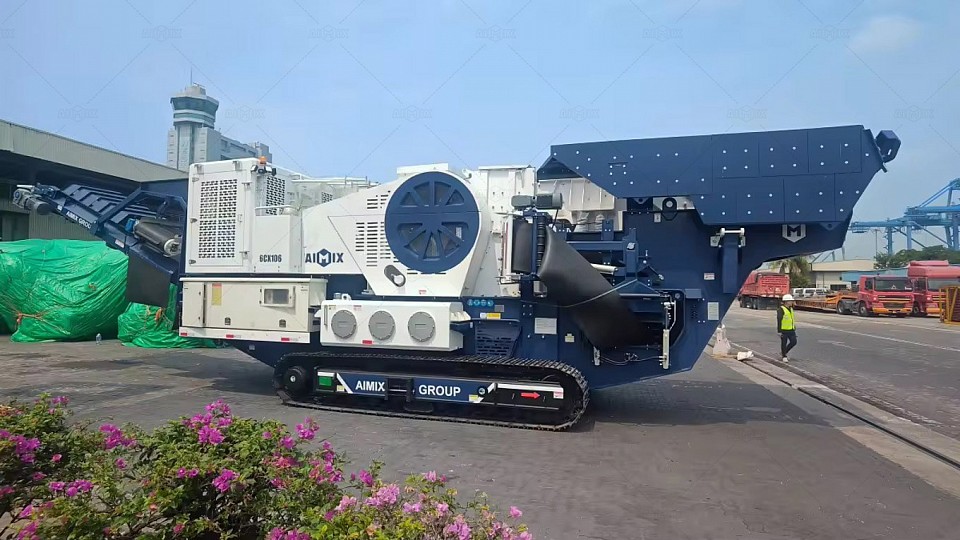
The mobile jaw crusher is a chameleon. It wears the same steel skin whether it is working in a granite quarry or a demolition recycling yard. Yet the financial reality of owning that machine differs dramatically between these two applications. A crusher that generates a healthy return in a hard rock quarry may struggle to break even in a concrete recycling operation. The jaw crusher price tag on the brochure is identical. The total cost of ownership is not. This article dissects the divergence. It examines the duty cycle differences, wear part consumption rates, and revenue per ton variations that separate quarrying from recycling. The conclusion is direct. Contractors must not buy a mobile jaw crusher based on price alone. They must buy based on the application. The same machine is not the same investment.
Duty Cycle: Continuous Crushing Versus Intermittent Operation
A quarry operates on a predictable rhythm. The primary crusher receives a steady feed of blasted rock. The rock size is relatively uniform. The moisture content is low. The crusher runs for eight, ten, or twelve hours per shift. It stops only for scheduled maintenance or unexpected breakdowns. This continuous duty cycle is forgiving. The crusher reaches thermal equilibrium. Bearings run at stable temperatures. Hydraulic systems operate within design parameters. The quarry operator can optimise the crusher settings for maximum throughput and then leave them unchanged for weeks. The predictable load profile allows accurate prediction of wear part life. A set of jaw dies in a granite quarry may last 1,000 to 2,000 hours. The operator knows this. They plan replacements. They budget accordingly. The quarry application is severe but consistent.
The recycling yard is the opposite of predictable. The feed material is heterogeneous. Concrete chunks contain rebar. Asphalt slabs carry embedded aggregate. Bricks crumble unpredictably. The crusher must handle these variations without complaint. The duty cycle is intermittent. The crusher runs for an hour, then stops while the excavator sorts debris. It runs again, then stops for a magnet to remove steel. The thermal cycling stresses components. Bearings expand and contract. Seals leak. The intermittent operation also reduces the effective production rate. A crusher rated at 200 tons per hour in continuous operation may achieve 120 tons per hour in recycling service. The wear part consumption is higher per ton. Rebar and steel fragments accelerate jaw die wear. A set of dies that lasts 1,500 hours in a quarry may last 500 hours in recycling. The duty cycle difference is not marginal. It is fundamental.
Wear Part Economics: Abrasion Versus Impact
The wear mechanism in a jaw crusher differs by application. In quarrying, the primary wear mechanism is abrasion. Hard rock particles slide across the jaw die surface, removing material gradually. The wear pattern is relatively uniform across the die face. In recycling, the wear mechanism is a combination of abrasion and impact. Steel rebar strikes the die surface, causing micro-cracking and spalling. Concrete fragments contain hardened paste that is abrasive. The result is accelerated wear, particularly on the lower portion of the die where the material exits the crushing chamber. The cost difference is substantial. A set of jaw dies for a 30-ton mobile track crusher costs $8,000 to $15,000. If the quarry operator replaces dies every 1,500 hours, the cost per hour is $5 to $10. If the recycling operator replaces dies every 500 hours, the cost per hour is $16 to $30. The recycling application is three times more expensive in wear parts alone.
Jaw dies are not the only wear components. The cheek plates, which protect the side walls of the crusher, wear faster in recycling due to the irregular shape of demolition debris. The pitman and toggle mechanism experience higher shock loads. Bearings fail more frequently. The conveyor belts are damaged by rebar punctures. The magnet, essential for steel removal, requires regular cleaning and occasional replacement. The cumulative effect is a maintenance cost that is 50 to 100 percent higher in recycling than in quarrying for the same machine. The buyer who assumes identical operating costs is making a costly error. The application determines the cost. The machine price is only the starting point.
Revenue Per Ton: The Other Side of the Equation
The revenue side of the equation also differs. Quarried aggregates command a price based on specification. A cubic meter of 20mm granite base course may sell for $15 to $25 depending on the market. The quarry operator has pricing power because the product is primary material. It cannot be substituted easily. Customers who need a specific gradation and particle shape will pay for it. The quarry operator also benefits from volume. A large quarry may produce 500,000 tons annually. The fixed costs are spread across many tons. The margin per ton, while modest, aggregates to a substantial profit.
Recycled aggregate faces different market dynamics. It competes with virgin material. It is often perceived as lower quality, even when it meets specifications. The price per ton is typically 20 to 40 percent lower than virgin aggregate. The recycling operator also faces higher processing costs due to steel removal and screening requirements. The margin per ton is thinner. The operator must process more tons to achieve the same profit. This pressure amplifies the impact of higher wear part costs. A recycling operation that cannot achieve high throughput will struggle to be profitable. The crusher that performs adequately in a quarry may be marginal in recycling. The buyer must understand this before signing the purchase agreement.
The authoritative conclusion is direct. A mobile jaw crusher for sale is not a commodity. Its value is determined by its application. The same machine that generates a 20 percent return in a quarry may generate a 5 percent return in recycling. The price on the invoice is identical. The reality beneath that price is different. Contractors must evaluate crushers based on the specific duty cycle, wear part consumption, and revenue per ton of their intended application. Generalisations are dangerous. Assumptions are expensive. The machine that works for your neighbour may not work for you. Do the analysis. Run the numbers. Then buy the right machine for your reality.
Maximizing ROI: How to Choose a Rock Crusher Machine for Sale for Aggregate Production
The aggregate industry has a dirty secret. Most buyers focus on the wrong metrics. They stare at horsepower ratings and jaw dimensions while ignoring the factors that actually determine return on investment. This is not an accident. Manufacturers benefit when you are confused. They profit when you buy a machine that looks impressive on paper but proves punishing in the pit. The critical buyer asks different questions. Not "how many tons per hour?" but "how many tons per hour at what operating cost?" Not "what is the purchase price?" but "what is the five-year cost of ownership?" This article takes a deliberately critical stance. It challenges conventional wisdom. It argues that the best rock crusher machine for sale for your aggregate operation is rarely the one that salespeople push hardest. Whether you are evaluating AIMIX crushers or competing brands, the analytical framework remains the same. You need to dissect the machine, interrogate the supplier, and model the economics with ruthless honesty. Anything less is not purchasing; it is gambling.
The Metrics That Actually Matter for ROI
Here is the first inconvenient truth. The throughput numbers on a crusher's spec sheet are laboratory fiction. They assume ideal feed material, perfect moisture content, and an operator who never sleeps. Your quarry is not a laboratory. Your rock has fractures, clay seams, and variable hardness. Your operators take breaks, make mistakes, and occasionally jam the chamber. The metric that matters is not theoretical maximum throughput but practical sustained availability. A crusher rated at 300 tons per hour that achieves eighty percent availability delivers 240 tons per hour. A crusher rated at 250 tons per hour with ninety-five percent availability delivers 237.5 tons per hour. The second machine costs less upfront and produces nearly the same output. Availability is a function of design simplicity, parts accessibility, and the supplier's local support infrastructure. Ask any experienced aggregate producer: the crusher that runs consistently outperforms the crusher that runs occasionally, regardless of its peak capacity. When comparing AIMIX crushers against alternatives, request availability data from existing customers. If the supplier cannot provide it, assume the worst.
The purchase price of a rock crusher is a minority of its lifetime cost. Wear parts dominate. Jaw dies, mantle liners, blow bars, and impact aprons consume capital relentlessly. A jaw crusher processing abrasive granite may need new dies every 500 hours. At $3,000 per set, that is $6 per operating hour. Over 10,000 hours, that is $60,000 in wear parts alone—potentially exceeding the machine's initial purchase price for smaller units. The critical variable is not just the cost of the parts but the frequency of replacement. An aggregate crusher for sale designed with thicker wear liners, reversible blow bars, or multi-part dies that allow partial replacement can dramatically reduce this expense. AIMIX has made deliberate engineering choices in this area on some models, using high-chromium alloys for impact components and providing access configurations that reduce replacement labor time. Do not accept generic statements about "wear-resistant materials." Demand specific data on expected liner life for your rock type. A supplier who cannot provide this has not tested their machine adequately.
The second hidden cost is energy. A typical 200-horsepower cone crusher consumes approximately 150 kilowatt-hours per hour of operation. At $0.12 per kilowatt-hour, that is $18 per hour. Over 2,000 operating hours annually, the electricity bill reaches $36,000. A machine that is fifteen percent more efficient saves $5,400 annually, or $27,000 over five years. This is real money. Yet efficiency data is rarely emphasized in crusher marketing. The efficiency differences stem from chamber geometry, drive train design, and the match between crusher type and feed material. A cone crusher is more efficient than an impact crusher for hard, abrasive rock. A jaw crusher feeding a cone is more efficient than a jaw crusher feeding an impactor for most applications. AIMIX and other manufacturers publish power consumption curves for their machines. Demand them. Compare them. A machine that costs $10,000 more but consumes twenty percent less power pays for the difference within two years. The reverse is also true. A cheap machine with poor efficiency is a long-term liability disguised as a short-term saving.
Critical Analysis of Crusher Types by Application
Jaw crushers dominate primary crushing applications for good reason. They are simple, reliable, and tolerant of oversize feed. A jaw crusher will chew through material that would destroy an impactor. It will accept occasional tramp metal without catastrophic failure. These virtues are real. However, the jaw crusher has limitations that buyers routinely ignore. It produces a flaky, elongated product shape that performs poorly in many aggregate specifications. The reduction ratio is modest—typically three or four to one. Material must pass through secondary and tertiary crushing to reach saleable gradations. This means a jaw-based circuit requires additional crushers, screens, and conveyors. The capital cost multiplies. The operating cost multiplies. For applications where cubical product shape is not critical—road base, fill material, some concrete aggregates—the jaw crusher makes sense. For high-specification asphalt or concrete sand, a jaw-only circuit is insufficient. AIMIX jaw crushers compete effectively in the primary role, particularly the larger models with hydraulic adjustment and reversible jaw dies. But do not let the reliability of the jaw blind you to the expense of the circuit it necessitates.
Horizontal shaft impactors offer compelling advantages. They achieve high reduction ratios in a single pass. They produce excellent cubical product shape. They are less sensitive to feed gradation than cone crushers. For medium-hard rock and recycling applications, the impact crusher is often the optimal choice. The cost is wear part consumption. An impactor processing abrasive rock will consume blow bars at rates that make accountants weep. The very mechanism that creates the high reduction—high-speed impacts—also erodes the components. AIMIX impact crushers use alloy blow bars and wear-resistant liners that extend life, but physics is physics. High chrome content improves wear resistance but makes the bars more brittle. Ceramic inserts improve life dramatically but increase cost per set. The critical analysis is this: an impactor is the right choice for limestone, dolomite, and other moderately hard rocks. It is the wrong choice for granite, basalt, and quartzite. Buyers who ignore this distinction pay for their mistake in every blow bar replacement. The supplier who recommends an impactor for hard rock without discussing wear part economics is not serving your interest.
Cone crushers occupy the sweet spot for hard rock aggregate production. They are less efficient than impactors on soft rock but vastly more durable on abrasive material. The product shape is good, though not quite as cubical as a well-tuned impactor. The reduction ratio is moderate, requiring multiple stages for significant size reduction. The critical advantage of the cone is wear part longevity. Manganese liners in a cone crusher processing granite may last 1,000 hours or more. This is three to five times the life of blow bars in a comparable impactor. The operating cost advantage is substantial. AIMIX cone crushers, particularly the multi-cylinder hydraulic models, offer advanced features such as automatic setting adjustment, tramp iron release, and hydraulic chamber clearing. These features reduce downtime and protect the crusher from damage. The criticism is that cones are less forgiving of poor feeding. A cone crusher requires consistent choke feeding to operate efficiently. It cannot tolerate the intermittent, irregular feed that a jaw crusher handles without complaint. The buyer must match the crusher to the feeding system. A cone fed poorly is a cone that produces poorly.
Supplier Evaluation and Procurement Strategy
The most dangerous document in equipment purchasing is the glossy brochure. It contains carefully selected data, artfully framed claims, and omissions designed to obscure weaknesses. The critical buyer verifies. Ask for a list of crushers operating in your region, processing similar rock. Contact those operators. Ask about wear life, downtime events, and the supplier's response when problems occurred. Inspect a crusher that has operated for 2,000 hours. Look at the wear patterns. Look for cracks in the structure. Look for evidence of lubrication issues. A supplier who refuses access to existing customers is a supplier who has something to hide. AIMIX, like any reputable manufacturer, should provide references. If they hesitate, ask why. The answer will be instructive. Beyond references, evaluate the local support infrastructure. Where are spare parts stocked? What is the typical lead time for a set of jaw dies? Is there a factory-trained technician within 200 kilometers of your site? The crusher that cannot be supported is the crusher that cannot be relied upon, regardless of its specifications.
The final step in maximizing ROI is building a site-specific total cost of ownership model. This is not an exercise for the supplier; it is an exercise for you. Start with the purchase stone crusher plant price, including delivery, installation, and initial commissioning. Add annual wear parts cost based on expected hours and the supplier's wear life claims. Adjust downward for realism—supplier claims are typically optimistic. Add energy cost based on power consumption curves and your local electricity or diesel price. Add maintenance labor cost, estimating hours per week for lubrication, liner changes, and inspections. Add downtime cost, assigning a dollar value to each hour the crusher is not producing. This last figure is where many models fail. A crusher that saves $10,000 annually in wear parts but costs $50,000 annually in downtime is not a saving; it is a loss. Run this model for each candidate crusher. Compare the five-year total cost, not the upfront price. The machine with the lowest five-year cost is the machine that maximizes ROI. This may be an AIMIX crusher. It may be a competitor. The brand is less important than the discipline of the analysis. Do not let anyone sell you a machine based on emotion, brand loyalty, or a single favorable metric. Do the math. The math does not lie.
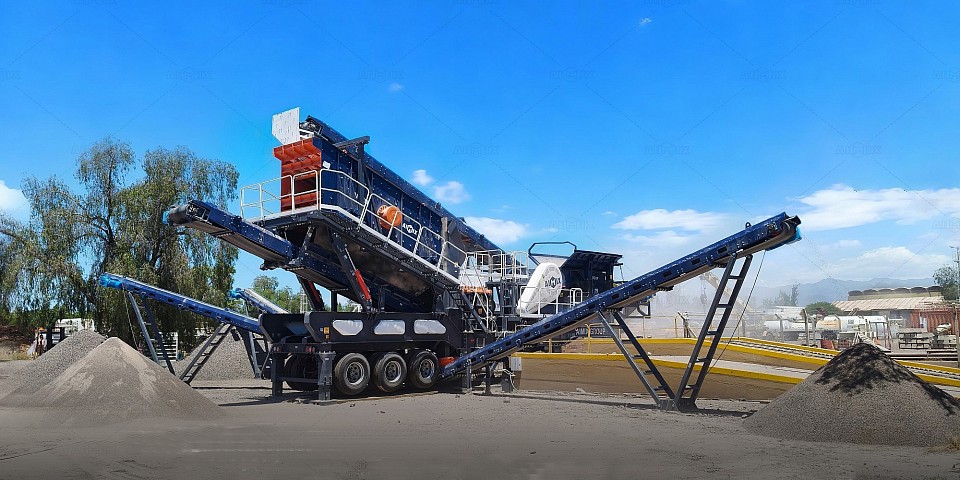
Beyond the Spec Sheet: Tuning Your VSI and Crusher Combo for Maximum Cubicity
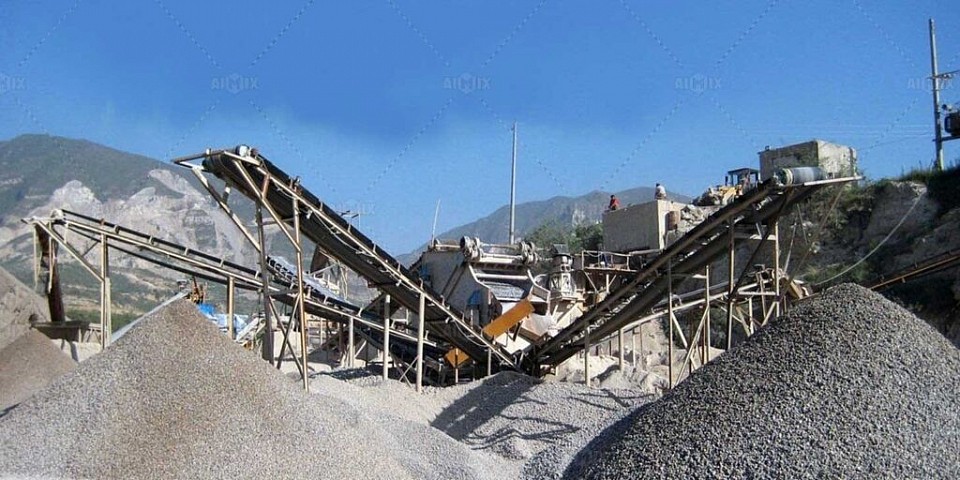
Modern aggregate production no longer hinges solely on horsepower or throughput; it is increasingly defined by shape fidelity, gradation harmony, and the nuanced orchestration of crushing stages. Nowhere is this more evident than in the pairing of Vertical Shaft Impactors (VSI) with cone or jaw crushers. While specification sheets provide baseline parameters, true performance emerges from calibration, iteration, and a granular understanding of material behavior. Achieving superior cubicity is less about raw machinery and more about deliberate tuning—an exercise in both science and craft.
Understanding Material Behavior and Feed Dynamics
The pursuit of optimal cubicity begins long before material enters the VSI. It starts at the feed. Aggregate, in its raw form, is rarely cooperative; it carries variability in hardness, moisture content, and fragmentation tendencies. Feed gradation, in particular, exerts an outsized influence on downstream performance. A poorly graded feed—either too coarse or excessively fine—can destabilize the crushing process, leading to erratic particle shapes and inefficient energy utilization.
A well-graded feed, by contrast, enables consistent inter-particle crushing. This is critical. VSI crushers - sand making machines excel not merely by impacting rock against metal, but by facilitating rock-on-rock interactions that refine particle geometry. When feed material is appropriately stratified, the crusher operates in a more laminar, predictable regime. The result is improved cubicity and reduced flakiness.
Rotor speed further complicates—and enhances—this dynamic. Higher rotor speeds increase the kinetic energy imparted to particles, promoting more aggressive fragmentation. Yet, this is not universally beneficial. Excessive speed can generate undue fines, diminishing yield and increasing wear. The cascade ratio—the proportion of material bypassing the rotor and entering the crushing chamber directly—must be tuned in tandem. A higher cascade ratio cushions the impact zone, reducing wear but potentially compromising shape. Conversely, a lower ratio intensifies crushing action.
Precision lies in balance. Operators must align rotor speed and cascade ratio with the intrinsic properties of the material being processed. Dense, abrasive rock demands a different configuration than friable limestone. Subtle adjustments yield disproportionate results.
Synchronizing VSI and Primary/Secondary Crushers
A VSI does not operate in isolation. Its efficacy is contingent upon the performance of upstream gravel crushers—typically jaw or cone units—and the configuration of the overall circuit. Synchronization across these stages is paramount.
Closed circuit systems, where material is recirculated until it meets size specifications, offer a fertile ground for optimization. Recirculation load, however, must be vigilantly controlled. Excessive recirculation can choke the system, leading to diminished throughput and increased energy consumption. Insufficient recirculation, on the other hand, allows suboptimal particles to escape, undermining cubicity.
The interface between the cone crusher and the VSI is especially critical. Cone crushers are adept at producing a consistent size reduction but often generate elongated or flaky particles. The VSI’s role is corrective—it reshapes these particles into more cubical forms. However, if the cone crusher is set too tight, it may overproduce fines, starving the VSI of the coarse material it needs for effective shaping.
Reduction ratios must therefore be distributed judiciously. Allow the primary and secondary crushers to perform bulk size reduction without overworking the material. Reserve the VSI for final shaping. This division of labor enhances efficiency and prolongs equipment life.
Moreover, screening plays a pivotal role in synchronization. Properly calibrated screens ensure that only appropriately sized material enters the VSI. Oversized fragments should be redirected upstream, while fines bypass the VSI entirely. This selective routing minimizes unnecessary processing and preserves energy.
Fine-Tuning for Cubicity and Consistency
Once the system is balanced at a macro level, attention shifts to micro-adjustments. This is where operational excellence distinguishes itself. Wear parts—anvils, shoes, and liners—must be selected and maintained with precision. Their geometry directly influences particle trajectory and impact angles, which in turn affect final shape.
Chamber configuration is another lever of control. Adjusting the internal layout of the VSI can alter material flow patterns, enhancing or diminishing inter-particle collisions. Even minor modifications can recalibrate the entire crushing environment.
Operational parameters, too, demand scrutiny. Feed rate, for instance, must be consistent. Fluctuations introduce variability that propagates through the system, eroding product quality. Automated control systems can assist, but human oversight remains indispensable. Experienced operators develop an intuitive sense for the machine’s rhythm—a tacit knowledge that no specification sheet can convey.
Monitoring output is the final, indispensable step. sampling and particle shape analysis provide empirical feedback. Metrics such as flakiness index and elongation ratio offer quantifiable insights into cubicity. When deviations occur, adjustments must be made iteratively. There is no static “perfect setting”; conditions evolve, and so must the configuration.
In advanced operations, digital tools augment this process. Sensors track vibration, throughput, and wear patterns in real time. Data analytics can identify inefficiencies that would otherwise remain obscured. Yet, technology is only as effective as its interpretation. Data must be contextualized within the broader operational framework.
Ultimately, tuning a VSI and crusher combination is an exercise in continuous refinement. It requires vigilance, adaptability, and a willingness to interrogate assumptions. The reward is not merely improved cubicity, but a more resilient, efficient, and predictable production system.
Sand Maker ROI in 2026: Why Automation is the Key to Scaling Your Output
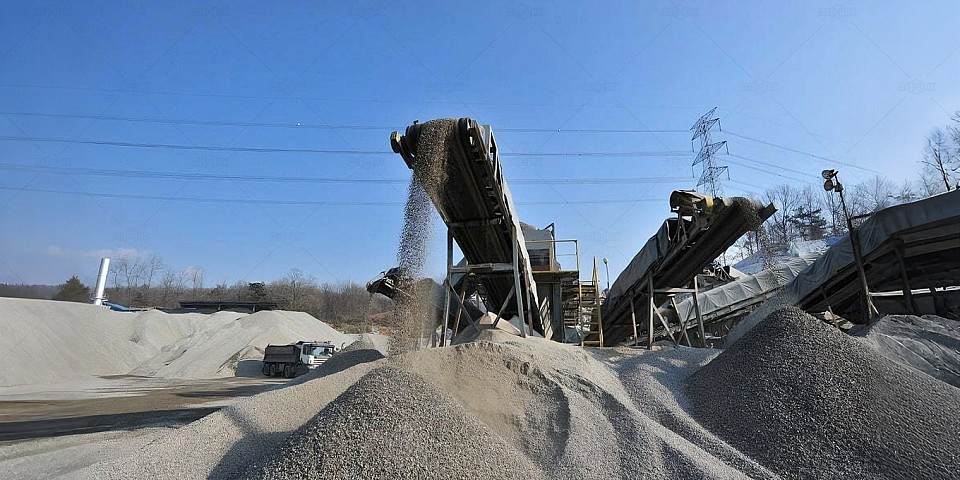
The calculus of return on investment in manufactured sand production has shifted dramatically as we move through 2026. Gone are the days when a single vertical shaft impact crusher, attended by a small crew manually adjusting feed rates and monitoring wear parts, could generate predictable margins. Today, the sand market is defined by tightening specifications, relentless pressure on product consistency, and a labor landscape that offers fewer skilled operators willing to endure the dust and noise of traditional crushing environments. Against this backdrop, automation has ceased to be a luxury and has become the primary lever for profitability. The sand maker machine—once a relatively simple machine—has evolved into a sophisticated mechatronic system where sensors, algorithms, and hydraulic controls work in concert to deliver output that manual operation simply cannot match. For the aggregate producer evaluating a capital investment in 2026, understanding the ROI implications of automation is not merely a matter of comparing purchase prices; it is about recognizing a fundamental shift in how value is created. The automated sand plant does not just make more sand; it makes better sand with fewer people, less waste, and a level of predictability that transforms the risk profile of the entire operation.
The Labor Arbitrage: Shrinking Crew Size While Expanding Run Time
The most immediate and quantifiable contributor to ROI in automated sand making lies in labor efficiency. A conventional sand plant requires a crew distributed across multiple functions: an operator monitoring feed rates, a technician adjusting crusher settings to compensate for wear, another managing the screening circuit, and often a dedicated individual overseeing the water management system for washing. These roles, moreover, are confined to daylight shifts in many operations, as the cost of staffing night crews erodes the margin gained from extended production. An automated sand maker collapses these functions into a centralized control architecture. One operator, seated in a conditioned control room, monitors the entire circuit through a human-machine interface that displays real-time data on everything from rotor acceleration to bearing temperatures to sand gradation curves. The machine adjusts its own parameters—feed rate, cascade air flow, rotor speed—to maintain the target product specifications without human intervention. This capability enables extended operating hours, often pushing toward 20-hour days or full 24/7 schedules with minimal shift premiums. The ROI calculation becomes straightforward: the annualized cost of the automation package is compared against the wage and benefit expenses of a reduced crew, multiplied by the additional production hours unlocked. For most operations, the labor savings alone recoup the automation premium within 18 to 24 months, leaving the remaining lifespan of the equipment as pure margin accretion.
Wear Parts Optimization: Precision Feeding and Rotor Protection
Beyond labor, the second pillar of automated ROI resides in the management of consumables—specifically, the wear parts that constitute a sand maker’s largest ongoing operational expense. In a manually operated VSI crusher machine for sale, the relationship between feed rate, rotor speed, and wear part life is managed by operator judgment. An operator who pushes too much material too quickly accelerates wear on the rotor tips and anvils; one who errs on the side of caution sacrifices throughput and efficiency. Automation introduces closed-loop control that continuously monitors the electrical draw of the crusher motor, the vibration signature of the rotor assembly, and the temperature of critical bearings. When these parameters deviate from optimal ranges, the system adjusts feed rate or rotor speed in real time, maintaining the machine at its most efficient operating point while preventing the conditions that accelerate wear. More sophisticated systems incorporate sensor technologies that detect the precise moment when a rotor tip has reached the end of its service life, scheduling maintenance precisely at the optimal interval rather than on a conservative schedule that leaves useful life unused. The financial impact is substantial. Wear parts for a high-capacity sand maker can represent $50,000 to $100,000 annually in a continuous operation. Automation typically extends wear part life by 15 to 25 percent, translating to direct savings that compound year after year. Unlike labor savings, which plateau once crew sizes are minimized, wear parts optimization continues to deliver returns throughout the equipment’s operational life.
Product Consistency and Market Positioning: Capturing the Premium for Manufactured Sand
The third dimension of automated ROI addresses the revenue side of the equation, and it is perhaps the most consequential in 2026. The market for manufactured sand has matured significantly, with ready-mix producers and asphalt plants demanding increasingly stringent gradations. A sand product that falls outside specification—too much material passing the 75-micron sieve, an irregular particle shape, excessive flakiness—is no longer simply discounted; it is rejected outright, sent back at the supplier’s expense. Manual sand plants, despite the best efforts of skilled operators, produce inconsistent results. Variations in feed material hardness, moisture content, and stone crusher wear introduce variability that cannot be eliminated without automation. An automated sand maker equipped with online particle size analyzers and shape characterization technology produces a consistent product that meets the tightest specifications shift after shift. This consistency commands a premium in the marketplace. Where generic manufactured sand sells at a base price, specification-grade material can achieve pricing 10 to 15 percent higher, often with the added benefit of long-term supply contracts that provide revenue stability. The ROI from this market positioning is multiplicative: higher revenue per ton, reduced exposure to spot-market volatility, and a reputation for reliability that attracts higher-value customers. For the aggregate producer willing to embrace automation in 2026, the combination of labor efficiency, wear parts optimization, and product consistency creates a return profile that manual operations simply cannot replicate.
Crushing Plant Layouts for Efficient Limestone Handling in Cement Manufacturing
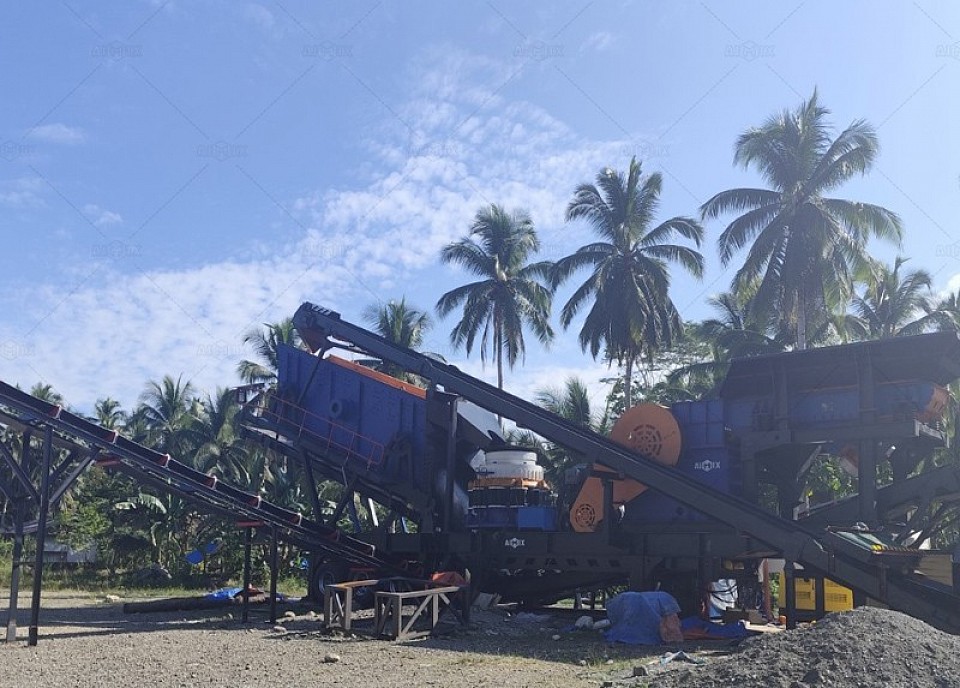
In the alchemical process of cement manufacturing, where limestone is transformed into the binding agent of modern civilization, the stone crusher in Indonesia serves as the critical throat through which all raw material must pass. Its design and layout are far more than an exercise in mechanical arrangement; they are the foundational determinant of the entire plant's operational efficiency, energy consumption, and ultimate profitability. Limestone, extracted from the earth in blocks of considerable size and varying hardness, arrives at the crusher's maw with inherent inconsistencies. How a facility manages this feed—from the moment the haul truck tips its load into the hopper to the delivery of finely milled raw meal to the preheater tower—dictates the rhythm of production. An inefficient layout creates a bottleneck, starving the kiln and disrupting the delicate thermal balance required for clinkerization. Conversely, a thoughtfully engineered crushing circuit ensures a steady, homogenized flow of material, smoothing out the natural variances of the quarry and presenting a consistent diet to the downstream processes. It is the silent, robust foundation upon which reliable cement production is built.
Optimizing Primary Crushing for Material Flow and Surge Capacity
The journey of limestone begins at the primary crusher, and its layout must prioritize two fundamental principles: unhindered material flow and the strategic absorption of production peaks. The interface between the quarry trucks and the crusher feeder is a zone of high-impact logistics. A properly designed dump hopper, with sloping walls angled to prevent bridging and rationing, ensures that even cohesive or slightly wet limestone moves freely into the apron feeder without requiring constant manual intervention. Below this, the selection between a mobile jaw crusher and an impactor hinges on the material's abrasiveness and moisture content, but the layout must also accommodate the inevitable surges in quarry output. Integrating a surge pile or a tunnel reclaim system immediately after the primary crusher decouples the mining operation from the rest of the plant. This buffer stockpile allows the quarry to operate in independent shifts, stockpiling material when the downstream plant is at capacity, and provides a reservoir of partially processed stone to feed the secondary stages during maintenance or upstream interruptions, ensuring the kiln never starves.
Designing Secondary and Tertiary Circuits for Particle Size Distribution
Once reduced to a manageable size, the limestone enters the realm of secondary and tertiary crushing, where the objective shifts from reduction alone to the precise control of particle size distribution. The layout of this mid-stage is a ballet of screens and crushers working in a closed circuit. The configuration must prioritize the early extraction of finished product. By positioning vibrating screens with appropriately sized decks immediately after the secondary crusher, material that has already reached the required specification bypasses the tertiary stage entirely. This practice, known as "scalping off" fines, prevents over-crushing, reduces unnecessary wear on tertiary crusher liners, and conserves energy. The layout should facilitate a recirculating load where oversize material is channelled back for further reduction, typically via cone crushers or horizontal shaft impactors, depending on the desired final aggregate shape for raw milling. A well-designed circuit here ensures that the raw mill receives a consistent feed profile, which is essential for grinding efficiency and the delicate art of raw mix proportioning.
Incorporating Dust Suppression and Maintenance Accessibility
No discussion of efficient crushing plant layout is complete without addressing the twin imperatives of environmental control and mechanical maintainability. Limestone handling is inherently dusty, and a layout that neglects particulate management invites regulatory friction and degrades equipment longevity. Strategic placement of misting sprays at transfer points—where material falls from one conveyor to another—can significantly agglomerate fugitive dust, causing it to settle back into the material stream rather than becoming airborne. Enclosing conveyor transfer towers and positioning dust collection units, such as baghouses, close to major emission sources like crusher discharges and screen decks, is a non-negotiable design element. Simultaneously, the layout must provide unimpeded access for heavy maintenance. Crusher wear parts, such as mantles and blow bars, require periodic replacement with cranes or excavators. Designing clear, reinforced concrete aprons around major equipment, with sufficient swing radius for mobile cranes and safe laydown areas for new and worn components, transforms maintenance from a logistical nightmare into a scheduled, efficient procedure, minimizing costly downtime and ensuring the limestone continues its journey toward becoming cement.
Particle Shape Matters: Tailoring Limestone Crusher Technology for Optimal Concrete Performance
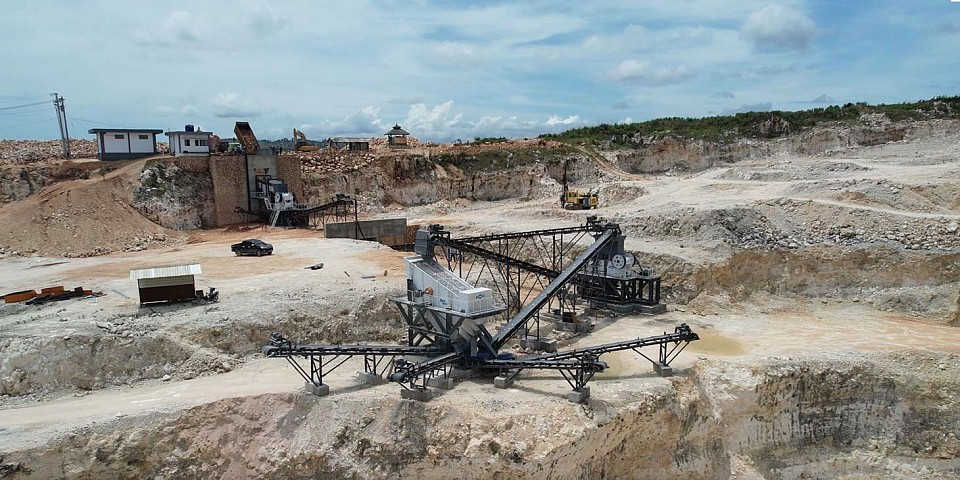
The production of high-performance concrete is a discipline of engineered harmony, where the properties of the binder matrix and the aggregate skeleton must be precisely balanced. For limestone aggregates, a common and critical building material, the focus has historically been on gradation and hardness. However, a more profound parameter—particle shape—has emerged as a dominant factor influencing the fresh and hardened properties of the final concrete. The limestone crusher technology and circuit design employed in a limestone quarry directly dictate this morphology, moving beyond simple size reduction to become a deliberate act of particle geometry engineering. Selecting the wrong crushing action can produce aggregates that, while correctly graded, compromise concrete strength, increase cement demand, and hinder workability. Achieving optimal performance requires a fundamental understanding of how particle shape translates to concrete behavior, and how specific crusher technologies can be tailored to produce the desired morphological outcome.
The Geometry of Strength: How Particle Morphology Governs Concrete Mechanics
Within a concrete matrix, aggregate particles form a discontinuous skeleton that carries compressive load. The efficiency of this load transfer is governed by particle shape. Cubical particles, with their high aspect ratio and angular, fractured faces, create a mechanical interlock. This interlock resists particle sliding and rotation under stress, leading to higher compressive and tensile strength, improved fatigue resistance, and superior durability in pavements and structural elements. Conversely, flaky or elongated particles—products of certain cleavage-prone crushing methods or inadequate processing—act as internal planes of weakness. They align under vibration, reducing interlock and creating zones of stress concentration. These particles are prone to breaking under load, and their shape increases the concrete’s water demand for a given workability, as their high surface area requires more cement paste for coating.
The economic and performance implications are direct. An aggregate with poor shape characteristics necessitates a higher cement content to achieve target strength, increasing cost and the embodied carbon of the concrete. It can also lead to poor workability, requiring more chemical admixtures and increasing the risk of honeycombing and surface defects. Therefore, the shape specification is not an aesthetic concern; it is a fundamental rheological and mechanical parameter. The ideal limestone aggregate for most high-specification concrete is a well-fractured, cubical particle with a low flakiness index, a result that is not accidental but must be engineered through deliberate crushing strategy.
Crusher Technology Selection: Matching Machine Action to Shape Objectives
The dominant crushing principles—compression, impact, and attrition—produce distinctly different particle shapes. For producing the coveted cubical product from limestone, impact crushing technology is often the premier choice. Vertical Shaft Impactors (VSI) and certain Horizontal Shaft Impactors (HSI) utilize high-velocity rotor systems to accelerate rock, inducing fracture primarily through violent inter-particle collision—the "rock-on-rock" principle. This action shatters the limestone along its natural cleavage planes in multiple dimensions, producing a high yield of cubical, well-fractured particles with a textured surface that enhances the bond with cement paste. Impact crushers are the cornerstone of modern manufactured sand (M-Sand) production, where particle shape is paramount.
Compression crushers, namely jaw and cone crushers, operate by squeezing rock between manganese surfaces. While essential for primary reduction and capable of producing good quality aggregate, compression crushing tends to promote a more flaky or elongated particle morphology, especially at wider settings. The rock fractures along lines of natural weakness, often producing a less desirable shape. This does not preclude their use; it dictates their position in the circuit. A mobile jaw crusher for sale is ideal for primary breaking, but its product often requires further shape refinement. Cone crushers, particularly in secondary and tertiary positions, can be fine-tuned with chamber selection, speed, and closed-side setting to improve shape. Modern cone crushers with advanced chamber designs and high reduction ratios can produce a respectable cubical product, but they typically operate in a rock-on-metal environment, which can produce more elongated particles than a true rock-on-rock impactor. The selection is a strategic choice based on the feed material’s friability, abrasiveness, and the required product specification.
Optimizing the Circuit: From Primary Reduction to Final Gradation Control
Optimal particle shape is the result of the entire crushing circuit, not a single machine. A sophisticated circuit is designed to recirculate and re-crush out-of-spec, flaky material. A common and effective configuration for limestone is a three-stage circuit: primary jaw crushing, secondary cone crushing, and tertiary shaping via a VSI. The VSI (sand making machine) acts as a shape remediation unit, taking the cone crusher product and further fracturing the elongated particles to improve cubicity. The circuit is closed with multiple-deck screens that efficiently separate the product, sending oversized and, critically, the elongated mid-size fractions back to the shaping crusher. This recirculation load is a key process variable; too little and shape is not optimized, too much and the circuit becomes inefficient.
Final control is exerted through precise gradation management. A well-shaped particle in the wrong size fraction is of limited value. Modern plants use high-frequency screens and automated control systems to maintain tight tolerances on product gradation bands. Furthermore, the crusher operator must be an interpreter of the material. Even within a single limestone formation, hardness and cleavage characteristics can vary. Adjustments to crusher speed, feed rate, and closed-side setting must be made in response to these changes to maintain consistent shape. The process is one of continuous monitoring and adjustment, using particle shape analysis (often via digital imaging) alongside traditional gradation tests. The ultimate goal is to tailor the inherent properties of the limestone deposit, through targeted comminution technology, into an aggregate that actively enhances the performance, economy, and durability of the concrete it becomes. The crusher is thus the first, and most critical, step in concrete mix design.
Projecting Earnings: A Simple 100tph Capacity to Estimate Granite Crusher Payback Time
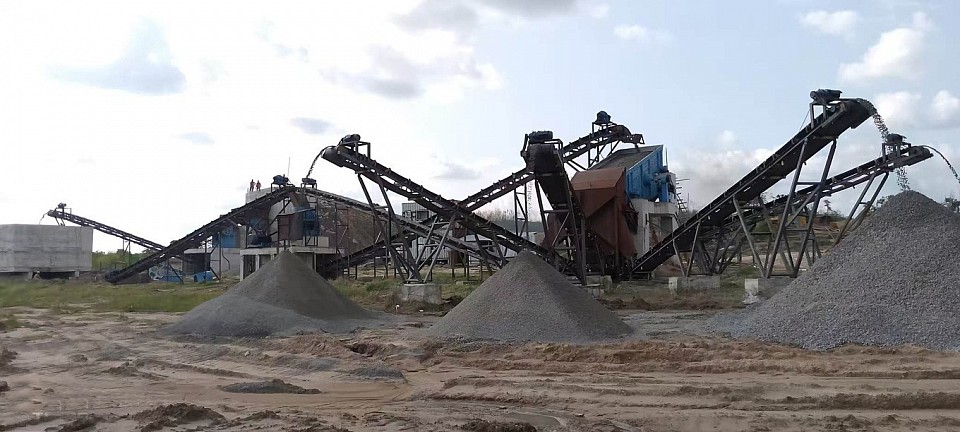
The decision to invest in a 100-ton-per-hour (TPH) granite crusher machine plant is ultimately validated by a single, critical metric: the payback period. This is the projected duration required for the net cash inflows generated by the asset to recoup its total initial capital outlay. For investors and quarry operators, developing a robust, yet simplified, financial projection is not mere speculation—it is the foundation of capital allocation and risk management. Using a 100 TPH capacity as a standardized model provides a clear framework for this analysis, translating mechanical throughput into a timeline for capital recovery. An accurate projection requires moving beyond optimistic theoretical yields to model realistic operational parameters, encompassing effective utilization, prevailing market rates for aggregate, and the comprehensive cost structure of running a hard-rock crushing circuit. This disciplined financial modeling transforms the plant from a capital expense into a quantified profit center with a predictable horizon for return on investment.
Establishing the Operational and Financial Baseline
The first pillar of the payback model is a realistic projection of gross annual revenue. The theoretical maximum, based on 24/7 operation, is irrelevant. A pragmatic analysis begins with effective annual operating hours. This factors in a single-shift operation (e.g., 2,000 hours/year), accounting for planned maintenance, weather delays, and market-driven stoppages. For a 100 TPH plant, this yields a baseline production volume: 2,000 hours x 100 tons/hour = 200,000 tons annually. This volume is then multiplied by the net realized price per ton of finished aggregate. This price is not the listed sales price but the revenue remaining after subtracting direct selling costs, such as delivery expenses for customers not collecting via truck, and any sales commissions. If the net realized price is $10/ton, the annual gross revenue potential is $2,000,000. This figure establishes the upper limit of earning potential before accounting for the costs of production.
Revenue potential is immediately offset by direct operating expenditures. These are the costs incurred only when the plant is running. The most significant is typically wear parts consumption—manganese jaw dies, cone liners, and screen media. Granite’s high abrasiveness results in a measurable cost per ton, which can range from $0.50 to $2.00 depending on crusher configuration and liner quality. Energy consumption for aggregate crushers, screens, and conveyors forms another major variable cost. Direct labor for plant operators and fuel for loaders and other support equipment complete the core variable costs. Summing these per-ton costs and multiplying by annual production provides the total annual variable operating expenditure. For example, at $3.00/ton in variable costs, the annual outlay would be $600,000. This gross margin—revenue minus variable costs—represents the cash contribution available to cover fixed costs and debt service before generating profit.
Modeling Capital Recovery: The Payback Calculation
The next step is to calculate the Net Operating Income (NOI) by subtracting fixed annual costs from the gross margin. Fixed costs are incurred regardless of production levels and include equipment financing payments (principal and interest), insurance, property taxes or lease fees, and salaries for fixed management staff. For illustration, if annual fixed costs total $400,000, and the gross margin is $1,400,000 ($2,000,000 revenue - $600,000 variable costs), the NOI would be $1,000,000. This NOI represents the annual pre-tax cash flow attributable to the crushing operation, before accounting for depreciation (a non-cash expense).
The Simple Payback Period is then a straightforward calculation: Total Capital Investment / Annual Net Operating Income. The total capital investment must include the complete turnkey cost: the stone crusher plant, ancillary equipment like loaders and drills, initial spare parts inventory, and installation/commissioning expenses. If the total capital outlay is $1,800,000, and the projected annual NOI is $1,000,000, the simple payback period is 1.8 years. This model provides a clear, preliminary timeline. However, it assumes constant, first-year optimal performance. A more conservative model might phase in revenue, projecting 60% utilization in Year 1, 85% in Year 2, and 100% in Year 3. This would extend the payback period, as the cumulative cash flow in the initial years would be lower. The simple model’s value is in establishing a baseline benchmark against which different financing scenarios and operational efficiencies can be measured.
Stress-Testing the Model: Sensitivity and Strategic Variables
A static projection is vulnerable to market realities. A professional analysis must therefore conduct sensitivity analysis on the model’s most volatile assumptions. The two most critical variables are typically plant utilization and net aggregate price. The model should be recalculated under a “stress scenario,” for instance, with utilization at 1,500 hours/year and the net price at $8.50/ton. This would dramatically reduce annual NOI and extend the payback period, perhaps to 3 years or more. This exercise identifies the operational and commercial thresholds that must be defended to ensure financial viability. It highlights that managing for maximum, consistent utilization is often more critical to payback than a slight increase in sales price.
Finally, the model should acknowledge strategic and indirect benefits that, while difficult to quantify, positively impact the investment’s value. Vertical integration—owning the crushing capacity for your own construction projects—provides cost certainty and insulation from market shortages. The ability to process and sell a wider range of products (e.g., manufactured sand) can enhance revenue. Furthermore, the asset itself holds a residual value. A conservative estimate of the plant’s resale value after the payback period should be considered, as it represents recovered capital. The most significant strategic benefit is often opportunity cost avoidance—the cost of notowning the plant, which includes profit margins paid to competitors for aggregate and vulnerability to supply chain disruption. A thorough payback analysis for a 100 TPH granite crusher therefore provides more than a date on a calendar; it provides a financial operating manual, highlighting the key levers of utilization, cost control, and market positioning that management must actively control to transform projected earnings into realized capital recovery and sustained profitability.
From Boulders to Pebbles: How Gravel Crushers Transform Material into 1/4", 1/2", and 3/4" Gravel
The reduction of a three-foot granite boulder into a stockpile of precisely graded pebbles represents one of the most controlled applications of mechanical force in the construction industry. This transformation is not merely a matter of making big rocks smaller; it is a rigorous process of dimensional standardization where output is measured to fractions of an inch. The specifications for concrete aggregate, drainage layers, and asphalt pavements demand strict adherence to these measurements. A deviation of even a quarter-inch in the wrong direction can compromise the structural integrity of a bridge deck or the drainage efficacy of a septic field. The machinery tasked with this precision—the cone crusher, the jaw stone crusher machine, and the impactor—operate in a synchronized sequence, each performing a specific reduction task to convert raw geological material into the commodified, uniform grades that underpin modern infrastructure.
The Primary Stage: Initial Fracture and the Liberation of Aggregate
The journey from in-situ rock to graded aggregate begins with the primary crusher, almost invariably a jaw crusher or a large gyratory unit. At this stage, the feed material can be enormous, with boulders exceeding one meter in diameter entering the chamber. The objective here is not precision, but brute-force liberation. The machine’s fixed and swinging jaws exert immense compressive stress on the rock, exceeding its tensile strength and inducing catastrophic fracture. The resultant product, typically ranging from six to eight inches down to four inches, is a jagged, heterogeneous mix. This material is then discharged onto a conveyor belt and transported to the next phase. An integral component of this stage is the vibrating grizzly feeder, which uses a series of parallel bars to scalp off fines and dirt before they enter the crusher gravel, preventing unnecessary wear and ensuring that only material requiring reduction proceeds. The output of the primary stage is the feedstock for all subsequent refinement.
Secondary and Tertiary Crushing: Achieving Precise Dimensional Reduction
Once reduced to manageable size, the material enters the domain of secondary and tertiary crushers, where the focus shifts from brute force to particle shape and dimensional control. For hard, abrasive rock like granite or basalt, the cone crusher is the machine of choice in this phase. It operates on the principle of compression between an eccentrically rotating mantle and a stationary concave liner. As the mantle gyrates, the rock is crushed against the concave, breaking along natural fault lines. The critical adjustment here is the Closed Side Setting (CSS), which determines the minimum gap between the mantle and concave at the bottom of the crushing chamber. By hydraulically adjusting the CSS, an operator can control the top size of the material leaving the chamber. For softer, less abrasive materials like limestone, a horizontal shaft impactor (HSI) is often deployed in this stage. Its high-speed rotors hurl the material against stationary aprons, shearing the rock and producing a more cuboidal shape favored for asphalt applications. The goal in these stages is to reduce the minus-six-inch feed down to the specific target sizes required by the market.
Screening and Classification: The Separation of Graded Fractions
The final determination of whether material becomes 1/4-inch chips, 1/2-inch pea gravel, or 3/4-inch base course occurs not in the aggregate crusher machine, but on the screening deck. Following the tertiary crushing stage, the entire material stream is directed to a multi-deck vibrating screen. These screens are layered with woven wire mesh cloths of specific apertures. The top deck, with the largest holes, allows everything smaller than, say, 3/4-inch to pass through, while retaining oversize material to be recirculated back to the crusher. The material that passes the top deck lands on a second deck with smaller holes, perhaps 1/2-inch. Material retained on this deck is chuted to a stockpile as 1/2-inch clean gravel. The material passing this deck falls to a third deck with 1/4-inch openings. The rock retained on this deck becomes the 1/4-inch product, while the minus-1/4-inch material passing all decks is collected as screenings or manufactured sand. This process of stratification and separation, occurring in a constant state of vibration, is what transforms a chaotic stream of crushed rock into orderly, market-ready inventory. The efficiency of this classification directly dictates the profitability of the entire operation, as mis-sized material must be re-crushed, incurring additional cost and energy expenditure.